Feud on Cherry Creek
Two ranch families, a fight over stolen cattle and brands, and the killings of 1887 in Arizona's Pleasant Valley, with the records, the old newspapers, and the guest ranch on the Tewksbury place.
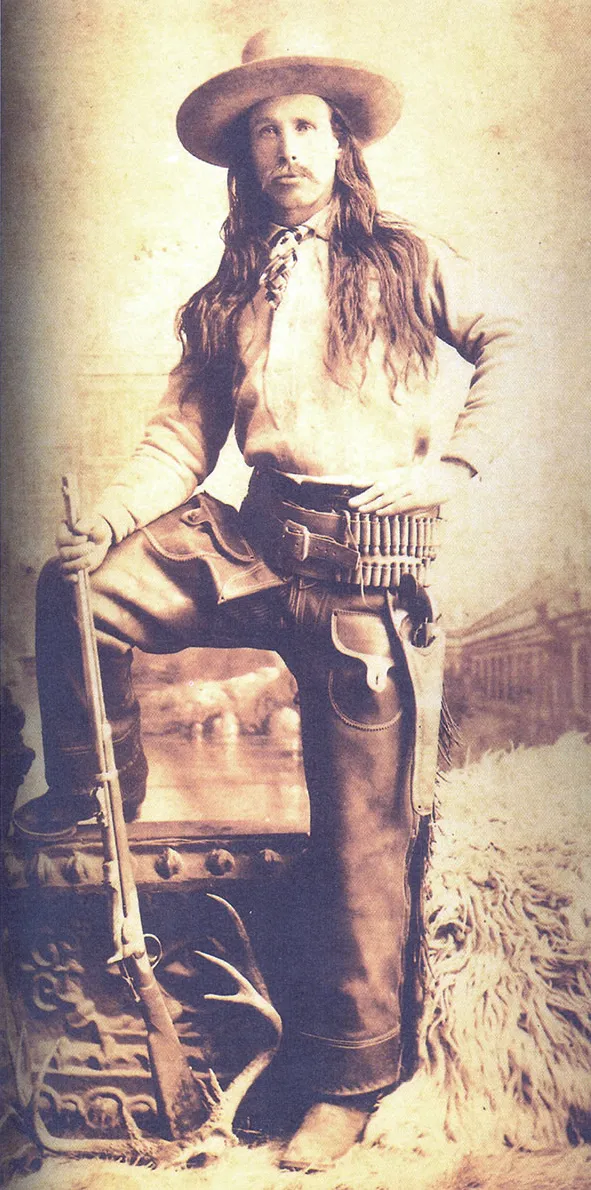
In 1998 a historian wrote up a small stone store in Young, Arizona, for the National Register of Historic Places. Her report calls what happened around it “the bloodiest feud in Arizona's history.” It was the Pleasant Valley War, between the Tewksbury and Graham families and the men who sided with them.
The worst of it came in 1887. Eduardo Pagán, whose 2018 book is the most recent full history, counts 18 men dead and one missing. One of the places it happened now takes guests. Cherry Creek Lodge says it sits on the homestead of J.D. Tewksbury, the family's father, on Cherry Creek. Below is what the records say, and where they disagree.
Chapter one
Neighbors
Pleasant Valley, 1878 to 1882
Pleasant Valley is in what is now Gila County. By 1878 four Tewksbury brothers, John, Edwin, Frank and James, had come in to start a cattle and horse ranch. Cherry Creek Lodge says their father, J.D. Tewksbury, moved there in 1879 with his second wife and their young son Walter, and that the older sons homesteaded an upper ranch nearby.
In 1881 James Stinson brought in 550 head of cattle, the first big herd in the valley. About a year later Ed Tewksbury met a young man in Globe who wanted a place to start a cattle ranch with his brother. That is how John and Tom Graham came to settle about two miles from the Tewksburys. The National Register report puts it simply: “The Tewksbury clan helped the Grahams build their first shelter.”
The Grahams had come from Iowa by way of California. McClintock wrote in 1916 that the Tewksbury brothers' mother was a California Indian. Pagán lists mixed-race landowners fighting to keep their land among the causes of what came next.
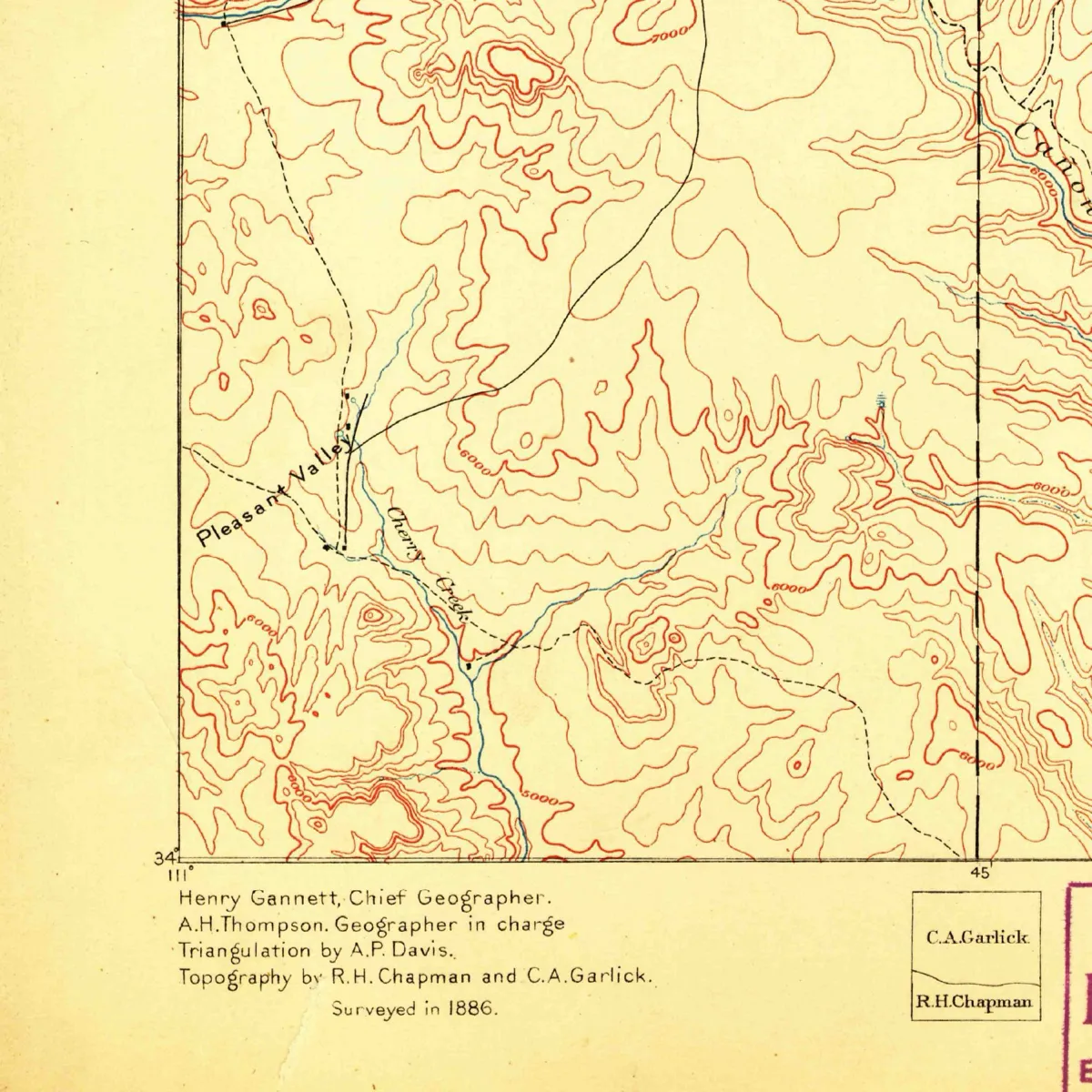
Chapter two
Brands in court
Cherry Creek and Prescott, 1883 to 1886
Stinson was missing cattle. On January 12, 1883, his foreman John Gilleland, a young cousin and Epitacio Ruiz rode to the northern Tewksbury place on Cherry Creek. The Tewksburys and both Grahams were there building a new cabin. In the argument that followed, both Gillelands were shot and wounded. A Prescott jury found Gilleland and Ruiz not guilty, and through the trial the Grahams and Tewksburys stood together.
Frank Tewksbury had to testify in Prescott in the dead of winter. He caught measles on the ride home and died. Many count him as the war's first death.
Then the Grahams changed sides. On November 14, 1883, “John Graham & Co.” signed a contract with Stinson. Graham would testify about thefts of Stinson's stock and be paid 50 head of cattle for each conviction. About the same time, the Grahams filed brand papers that cut Ed Tewksbury out of cattle the two families had held together.
In March 1884 John Graham swore that Ed, John and James Tewksbury had stolen 62 head of cattle by changing the brands. The Stinson contract was read in court. After two days of trials, the juries found everyone not guilty. Pagán counts about 30 court hearings in Prescott between 1883 and 1888, a three-day ride from the valley.
On July 22, 1884, John Tewksbury and three other men rode to Stinson's ranch during a roundup and confronted Marion McCann. Shots were fired and two of the riders were wounded, John Tewksbury slightly. From then on, the newspapers called it the Pleasant Valley War.
Chapter three
The Hashknife and the sheep
Northern Arizona, 1884 to 1886
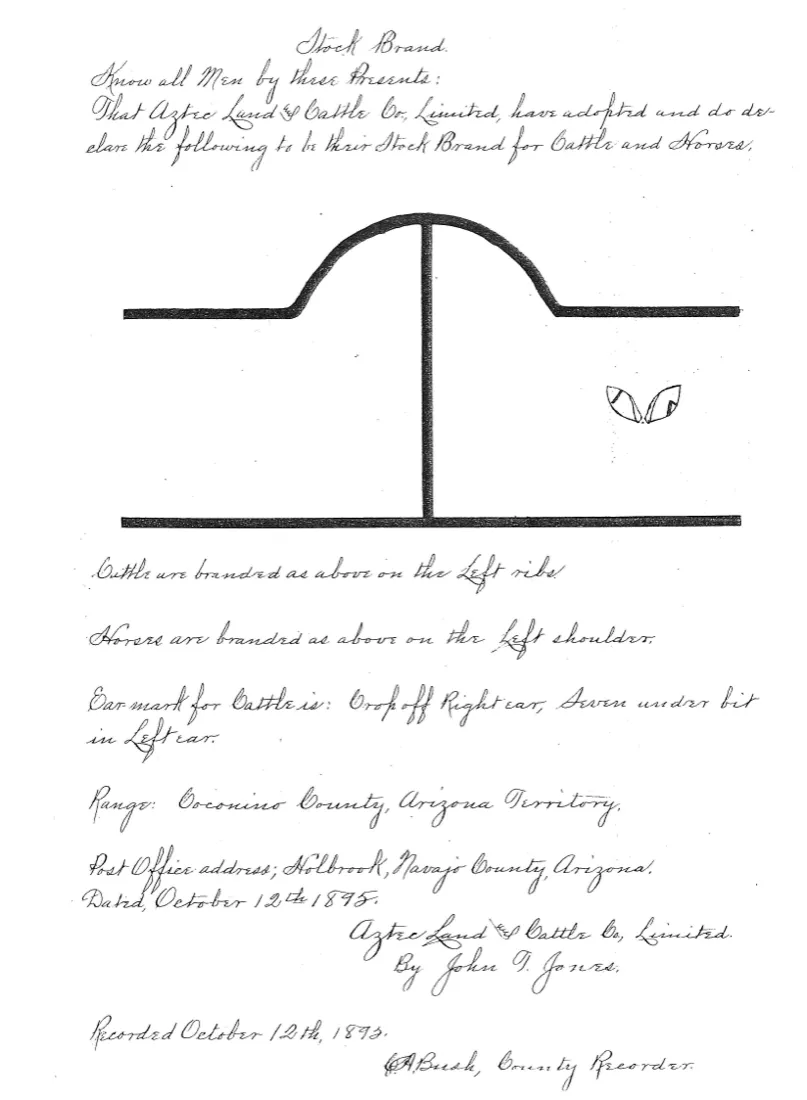
In 1884 the Aztec Land and Cattle Company came to northern Arizona. It ran its cattle under the Hashknife brand, and everyone called the outfit by that name. The National Register report says it controlled more than a million acres of its own land, plus as much again of public land, and that “Hashknife cowboys fenced off watering holes and ruthlessly drove all in their way.”
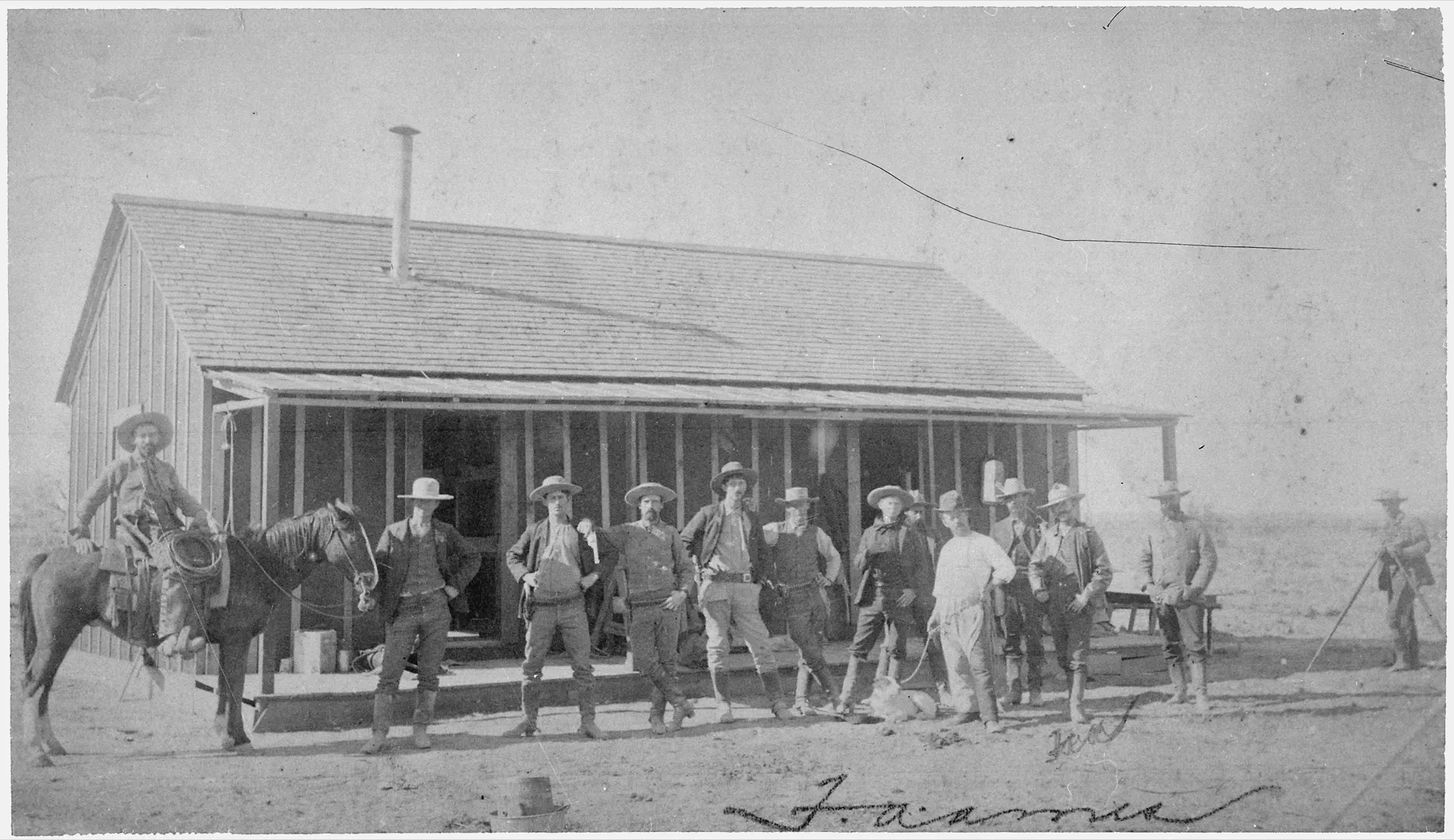
Among those squeezed were the Daggs brothers of Flagstaff, then the biggest wool growers in Arizona. In the spring of 1886 they made a deal with the Tewksburys, who agreed to take at least two flocks of Daggs sheep into Pleasant Valley for a share of them. The National Register report says the deal “changed the complexion of the conflict from that of rustlers' vendetta to range war.”
Chapter four
The killing summer
Pleasant Valley, 1887
Early in 1887 the headless body of a sheepherder was found. In July, Mart Blevins, a cattleman and the father of five sons, rode off and never came back. His sons sided with the Grahams.
In August, men on the Tewksbury side killed Hamp Blevins and John Paine at the Middleton ranch on Wilson Creek. Sources give the date as August 9 or 10, and the ranch was burned soon after. A week later, on August 17, William Graham, the youngest of the Graham brothers, was shot and died of his wounds.
On September 2, John Tewksbury and William Jacobs were killed on Cherry Creek. The National Register report names the killer as Andy Cooper, one of the Blevins sons, who went by that name. Most other accounts blame the Graham side in general.
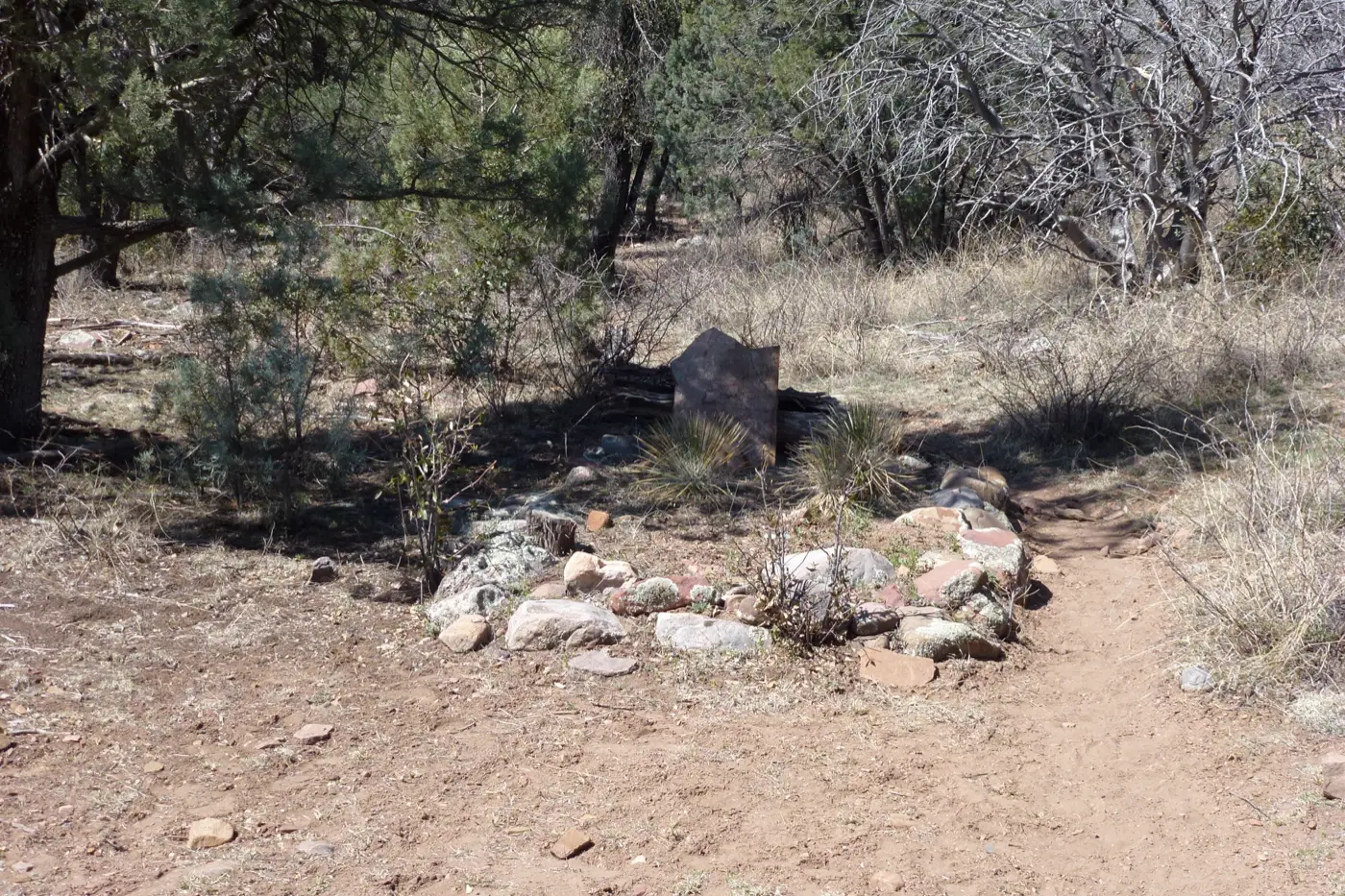
What happened after that is the part of the story people retell most, and the sources do not agree. McClintock wrote in 1916 that the bodies were left in sight of the house for hogs to eat, while gunfire from a hillside kept the family away. Zane Grey, in 1921, had two women saving the bodies from the hogs. A volunteer grave researcher who has been to the site doubts the family was pinned down, because the old cabin cannot be seen from the graves.
Chapter five
Two sheriffs
Holbrook and Young, September 1887
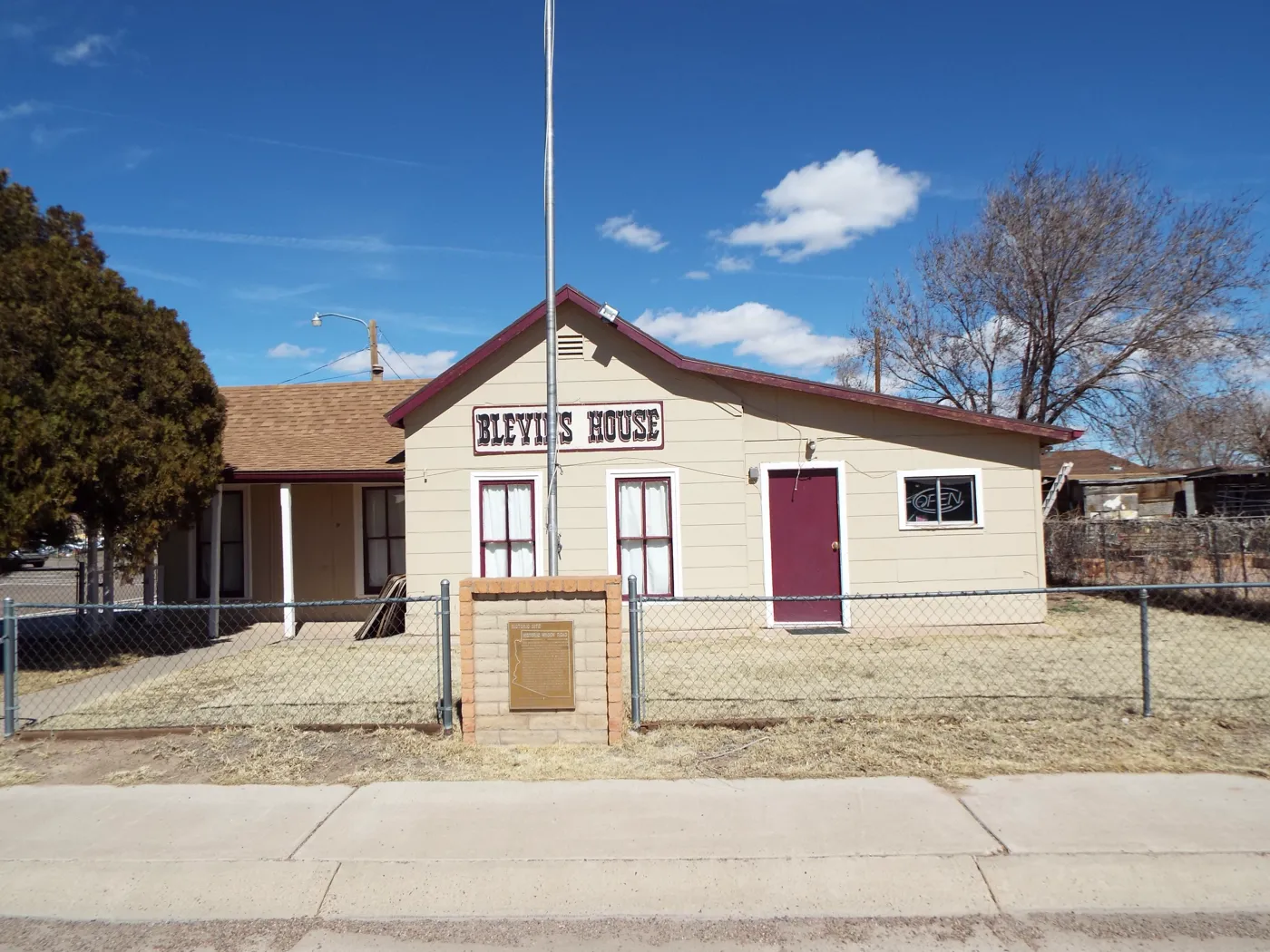
Two days later, on September 4, the sheriff of Apache County went to a house in Holbrook with a warrant for Andy Cooper. Commodore Perry Owens killed Cooper, Mose Roberts and Sam Houston Blevins there, and wounded John Blevins. Pagán calls it a 20-second gun battle.
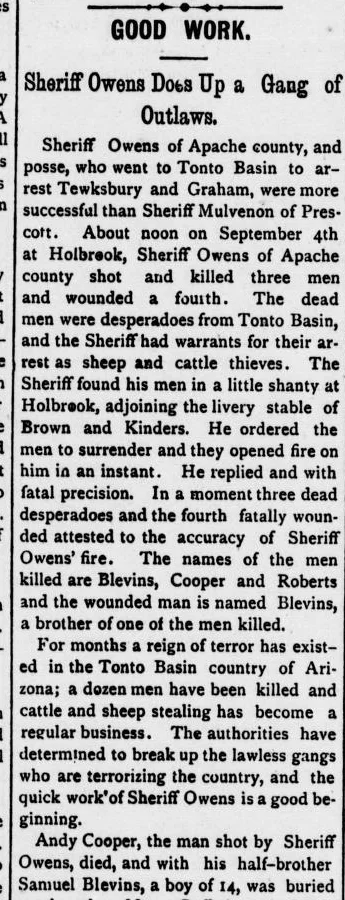
For months a reign of terror has existed in the Tonto Basin country of Arizona; a dozen men have been killed and cattle and sheep stealing has become a regular business.
Tombstone Epitaph, September 10, 1887
On September 17, Harry Middleton was wounded in a fight with the Tewksburys on Cherry Creek. He died two days later at the Graham ranch.
Yavapai County's sheriff, William Mulvenon, had left Prescott with a posse on September 10. At dawn on September 21 his men hid behind the half-built stone walls of an addition to the Perkins Store. When John Graham and Charles Blevins rode up, the report says, they “resisted arrest and were shot by the posse. Blevins died instantly; Graham succumbed a few hours later.” Mulvenon said the two men went for their guns. A Sharlot Hall Museum history notes that some of his own posse said he fired first. A grand jury indicted him, and he was found not guilty.
The store still stands about a mile and a half southwest of Young. Its walls are two feet thick with rifle ports. It went on the National Register in 1999, along with the small pasture where Graham and Blevins were shot.
Tom Graham, the last Graham brother, left the valley. He married Anne Melton on October 7, gave himself up the next day and was released on October 22. In November, Al Rose, a Graham man, was shot from ambush while looking for horses.
Chapter six
The last Graham
The Mogollon Rim to Tempe, 1888 to 1904
In August 1888 a vigilance committee hanged James Scott, James Stott and Bill Wilson. A Tewksbury man, James Houck, was said to have led it. By the end of that year the violence in the valley had died out, and the Daggs brothers took their sheep back out.
Tom Graham was farming near Tempe by then. On August 2, 1892, he was shot while driving a wagon of grain. McClintock says it happened near the Double Butte schoolhouse. Before he died, Graham said the men who shot him were Ed Tewksbury and John Rhodes.
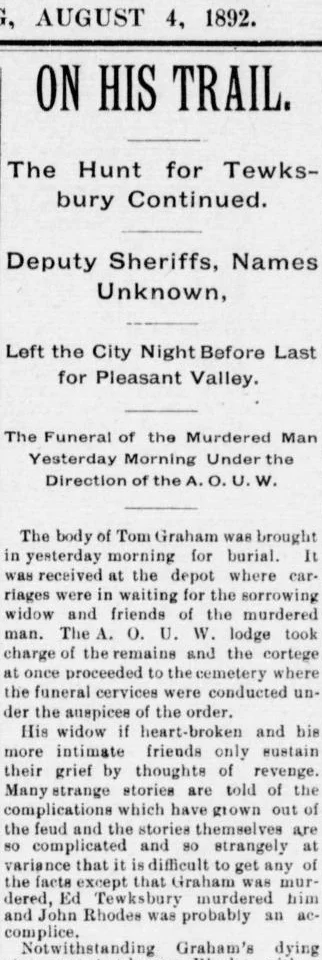
Rhodes went before a judge first. On the second day, Anne Graham “pulled a Colt .45 from the folds of her mourning garb and attempted to shoot the defendant. The gun misfired.” The judge accepted Rhodes's alibi and let him go.
Ed Tewksbury gave himself up. A jury found him guilty, but his lawyers showed that he had never been asked to enter a plea, and he got a new trial. McClintock says the second trial was held in Tucson and heard more than 100 witnesses. That jury could not agree, and the case was dropped in 1896.
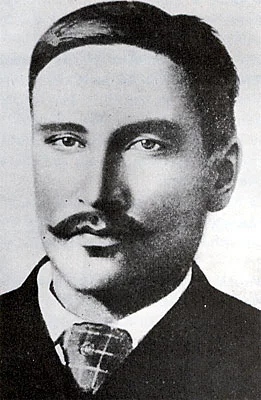
Ed Tewksbury died in Globe in 1904. McClintock says he had served there for a while as a peace officer. The National Register report says the courts' failure in the case “convinced many Americans that the territory was an uncivilized and lawless land unfit for statehood.”
Chapter seven
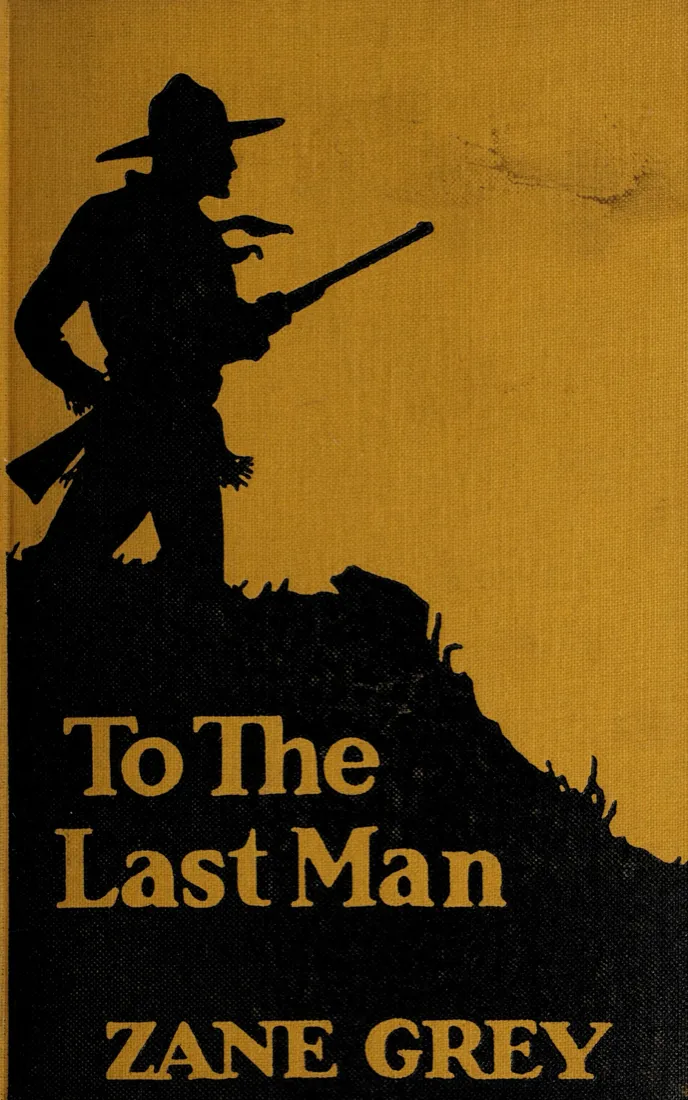
To the Last Man
The Tonto Basin, 1918 to 1923
Zane Grey first heard of the feud from a New Mexico cattleman. His guide, Al Doyle of Flagstaff, told him a version that “differed markedly.” Grey went into the Tonto Basin in the fall of 1918, again in 1919, and in 1920 with a bigger outfit. People told him stories, but:
No two of them agreed on anything concerning it, except that only one of the active participants survived the fighting. Whence comes my title, TO THE LAST MAN.
Zane Grey, foreword to To the Last Man, 1921
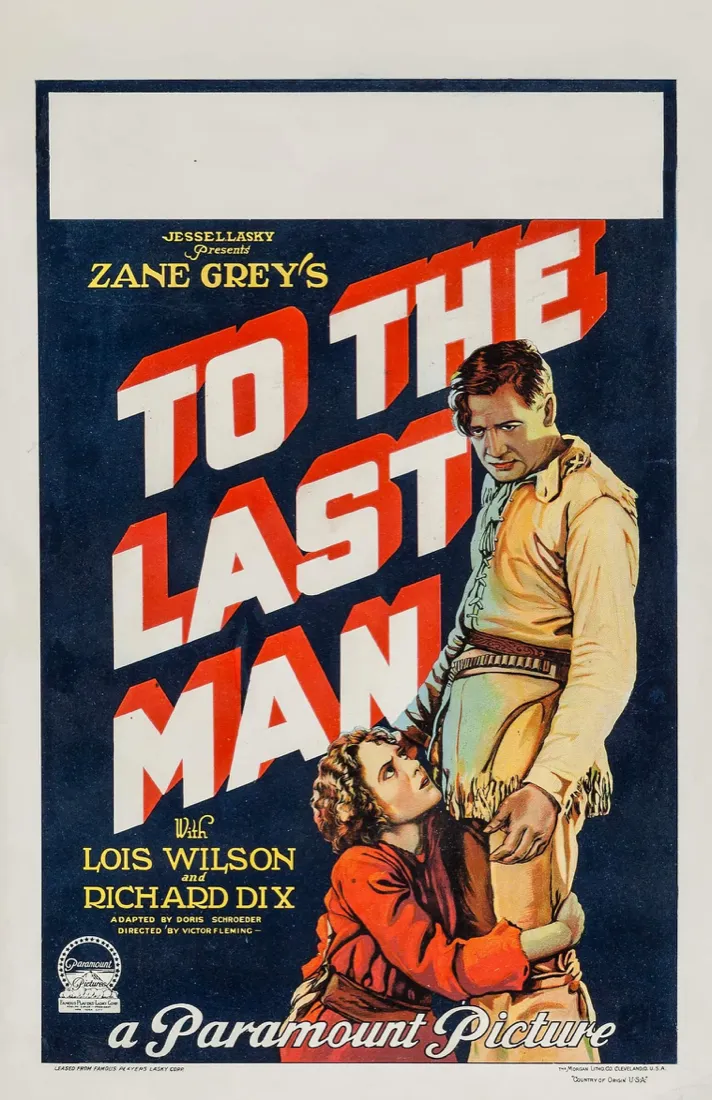
He admitted, “I never learned the truth of the cause of the Pleasant Valley War.” The novel is fiction. Its families are the Isbels and the Jorths, not the Grahams and Tewksburys. In 1923 Paramount made it into a film directed by Victor Fleming, with Richard Dix and Lois Wilson. A trade paper reported Grey and Fleming in the Tonto Basin that spring, scouting places to shoot it.
Chapter eight
What is left
Young and Cherry Creek today
The National Register report calls Perkins Store “a rare survivor of a war in which incidents often occurred at rural sites difficult to pinpoint, or at cabins that have since been demolished, burned, or relocated.”
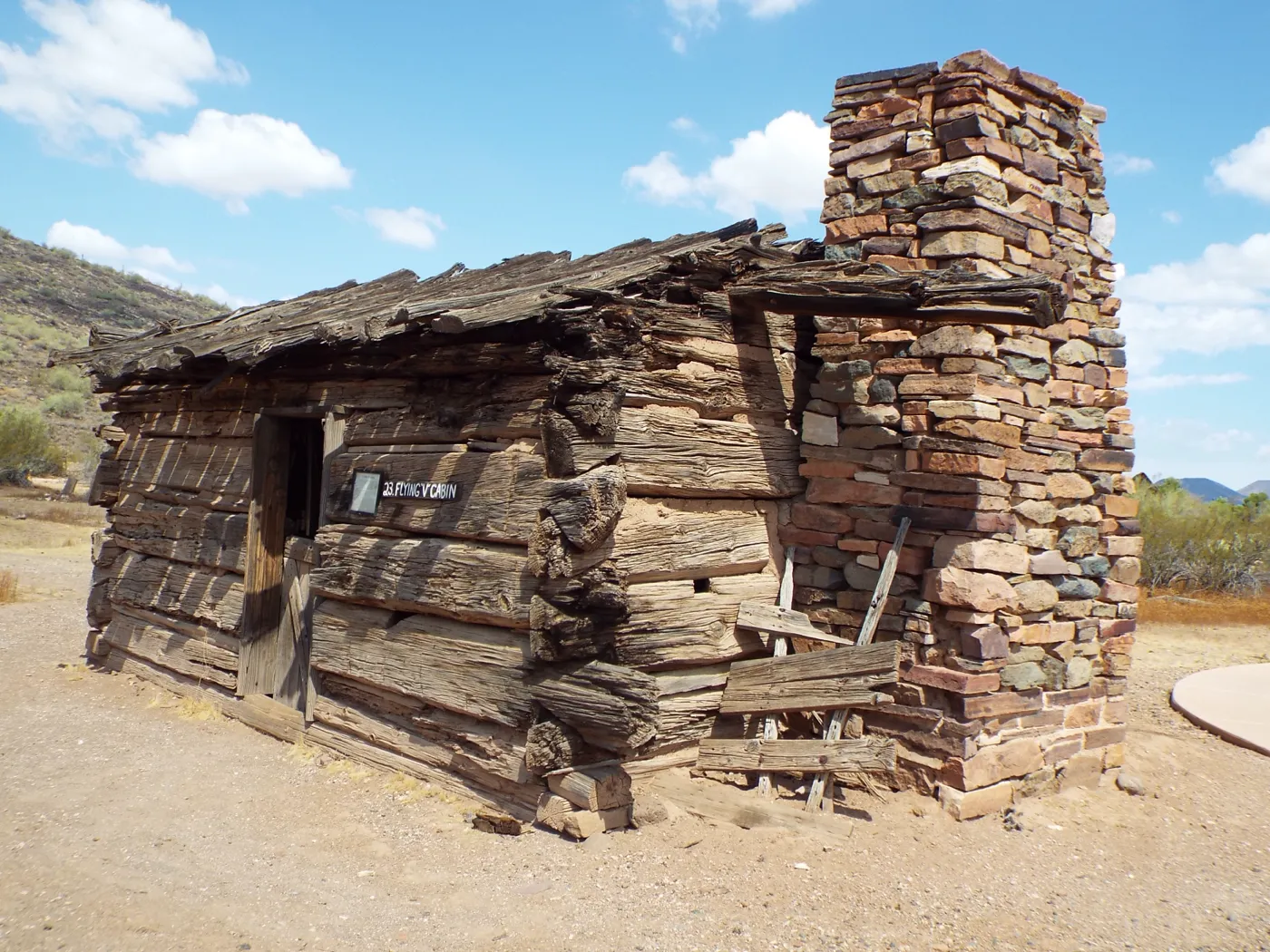
One of those cabins was moved. The Pioneer Arizona Living History Museum, north of Phoenix, has a log cabin it calls the Flying V. The museum says John Tewksbury built it along Cherry Creek around 1880, with gun ports in the walls, and that after his death it became a ranch building and later a line rider's cabin.
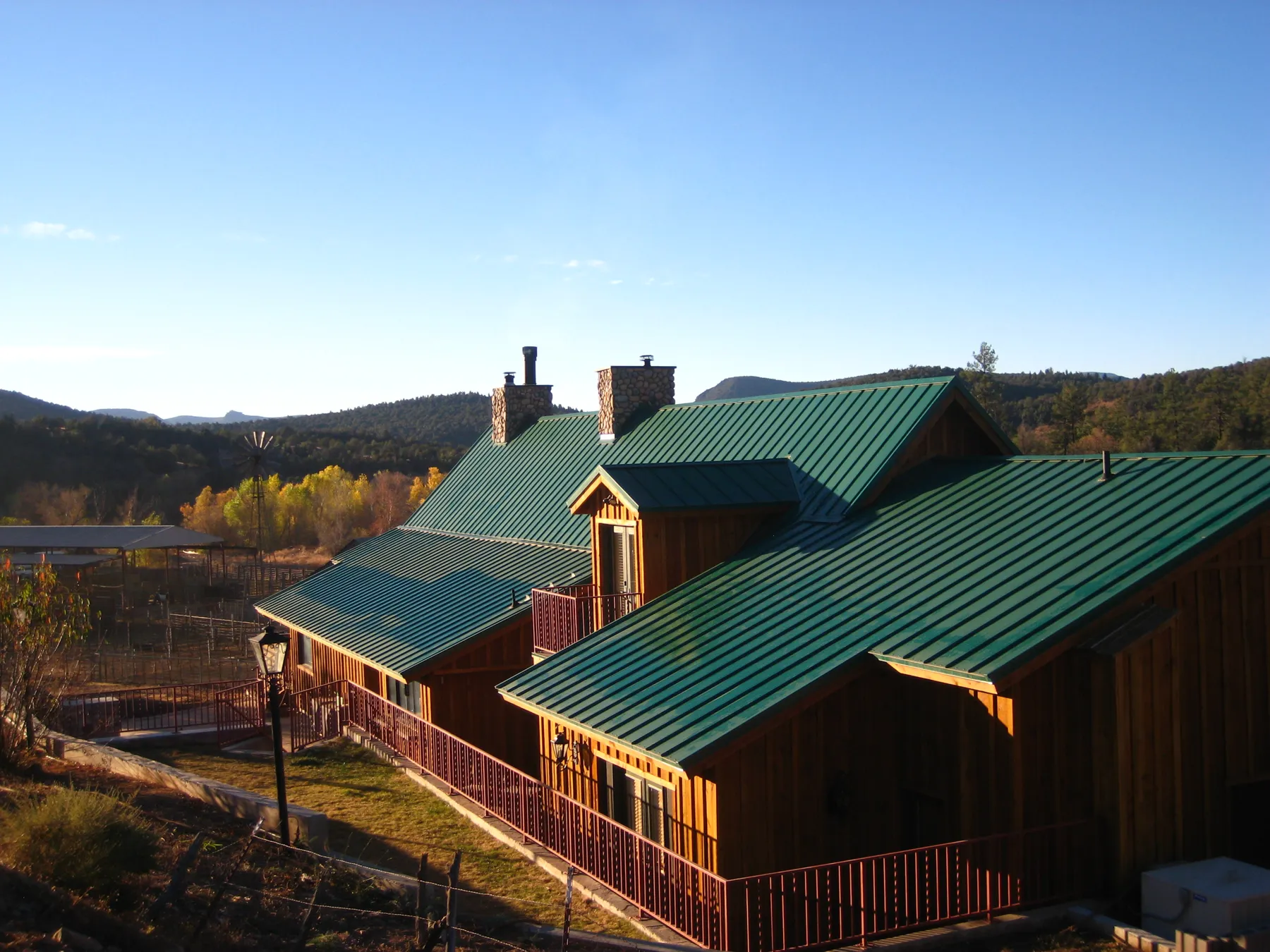
On Cherry Creek itself, Cherry Creek Lodge says it sits on J.D. Tewksbury's homestead. The lodge places the September 2, 1887 killing of John Tewksbury and William Jacobs on its ranch. It calls the hill above the cabin site Ambush Hill and shows a shell casing from the period. Its own history page notes that accounts disagree on who was in the cabin that day. It runs today as a working cattle ranch in the Tonto National Forest.
The map
Where it happened
Towns in this history Cherry Creek Lodge, Pleasant Valley
Timeline
Dates at a glance
- By 1878John, Edwin, Frank and James Tewksbury start a cattle and horse ranch in Pleasant Valley.
- 1881James Stinson brings in 550 head of cattle, the first big herd in the valley.
- About 1882Tom and John Graham settle about two miles from the Tewksburys, who help them build.
- Jan. 1883John and Elisha Gilleland are wounded at the northern Tewksbury place on Cherry Creek.
- Nov. 1883John Graham signs a contract to testify against cattle thieves for Stinson.
- 1884The Tewksburys are tried for stealing cattle and found not guilty. The Hashknife outfit arrives in northern Arizona.
- July 1884A shooting at Stinson's ranch. Papers start to call it the Pleasant Valley War.
- 1886The Tewksburys take Daggs brothers' sheep into the valley on shares.
- Aug. 1887Hamp Blevins and John Paine are killed at the Middleton ranch. Billy Graham is shot a week later.
- Sept. 2, 1887John Tewksbury and William Jacobs are killed on Cherry Creek.
- Sept. 4, 1887Sheriff Commodore Perry Owens kills three men at the Blevins house in Holbrook.
- Sept. 21, 1887Sheriff Mulvenon's posse kills John Graham and Charles Blevins at Perkins Store.
- Aug. 1888Vigilantes hang James Scott, James Stott and Bill Wilson on the Mogollon Rim.
- End of 1888Open violence in the valley ends.
- Aug. 2, 1892Tom Graham is shot near Tempe and names Ed Tewksbury and John Rhodes.
- 1892 to 1896Ed Tewksbury is convicted, gets a new trial, the jury hangs, and the case is dropped.
- 1904Ed Tewksbury dies in Globe.
- 1918 to 1920Zane Grey makes three trips to the Tonto Basin.
- 1921Grey signs the foreword to To the Last Man, his novel based on the feud.
- 1923Paramount releases the film, shot in the Tonto Basin.
- 1999Perkins Store is listed on the National Register of Historic Places.
Sources
Where sources disagree on a date, this piece follows the 1998 National Register nomination for Perkins Store, which tells the whole war year by year. The Middleton ranch fight is given as August 9 or 10, 1887, and the death toll runs from 18 to 50 depending on who is counting. What Cherry Creek Lodge says about its own land comes from the lodge's history page. Old photographs and newspapers shown are in the public domain. Modern photos are credited under their licenses.
- Pat H. Stein, National Register of Historic Places nomination, Perkins Store, Gila County, Arizona (1998)
- James H. McClintock, Arizona, Prehistoric, Aboriginal, Pioneer, Modern, vol. 2 (1916), "The Bloody Pleasant Valley War"
- Zane Grey, To the Last Man (1921), foreword
- Eduardo Obregón Pagán, Valley of the Guns: The Pleasant Valley War and the Trauma of Violence (University of Oklahoma Press, 2018)
- ASU News, "Arizona's deadly Pleasant Valley War," October 15, 2018
- University of Arizona Libraries, Special Collections, Ed Tewksbury preliminary examination transcript, 1892 (AZ 142)
- AFI Catalog, To the Last Man (1923)
- Sharlot Hall Museum, Eric Jacobson, "Yavapai Sheriff William 'Billy' Mulvenon and the Pleasant Valley War" (2020)
- American Pioneer and Cemetery Research Project, Tewksbury and Jacobs grave
- Pioneer Arizona Living History Museum, Flying V Cabin
- Cherry Creek Lodge, History of the Lodge
- Tombstone Epitaph, September 10, 1887 (Library of Congress, Chronicling America)
- Arizona Republican, August 4, 1892 (Library of Congress, Chronicling America)