Roughing it with comfort
How cattle ranches from the Dakota Badlands to Arizona started taking paying guests, with dates, old photographs, and the ranches on Brand Book that were there early.
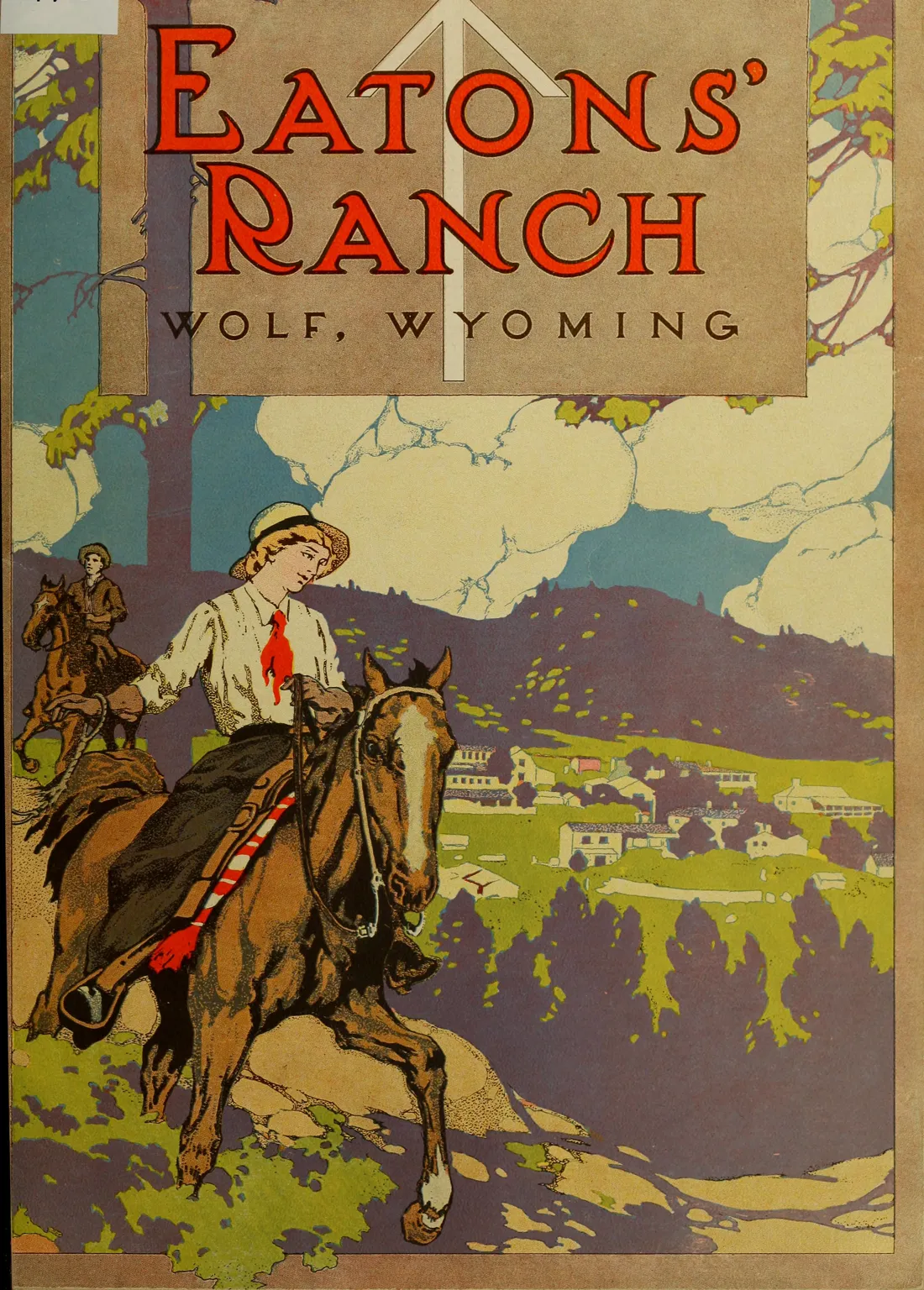
The title of this piece comes from a 1915 brochure for Eatons' Ranch, at Wolf, Wyoming. The brochure went out of its way to say what “roughing it with comfort” did not mean. Nobody should read into it “any thought of ultra-fashionable hotel life set amidst the western hills and plains.” Eatons' was “a real western ranch, open to visitors for a short period each year.”
Most of the ranches on Brand Book still offer something close to that. Below is where the idea came from, with dates and sources, and with the ranches on this site that were part of it. Facts about a ranch come from that ranch's own history page.
Chapter one
Board before the word
Estes Park, Colorado, 1873
Paying to stay on a cattle ranch is older than the word dude. In the fall of 1873 the English travel writer Isabella Bird rode into Estes Park and boarded at Griffith Evans's ranch. Evans had about a thousand head of cattle wintering in the park and took in people by the week. Bird wrote home on October 2:
I pay eight dollars a week, which includes the unlimited use of a horse, when one can be found and caught.
Isabella L. Bird, A Lady's Life in the Rocky Mountains, 1879
Her letters came out as a book in 1879. Nobody called Evans a dude rancher. That word was still a few years off.
Two ranches on this site are in the same high country. Wind River Ranch, south of Estes Park, was homesteaded in the 1870s by Elkanah Lamb, a preacher who kept cattle and a small dairy there. Its history says Lamb sold part of the land in 1902 to his nephew, Enos Mills, whom the ranch calls the founder of Rocky Mountain National Park. North of Fort Collins, Cherokee Park Ranch says it has welcomed guests since 1886, when it was a stagecoach stop on the road to Laramie.
Chapter two
The Badlands
Medora, Dakota Territory, 1879 to 1903
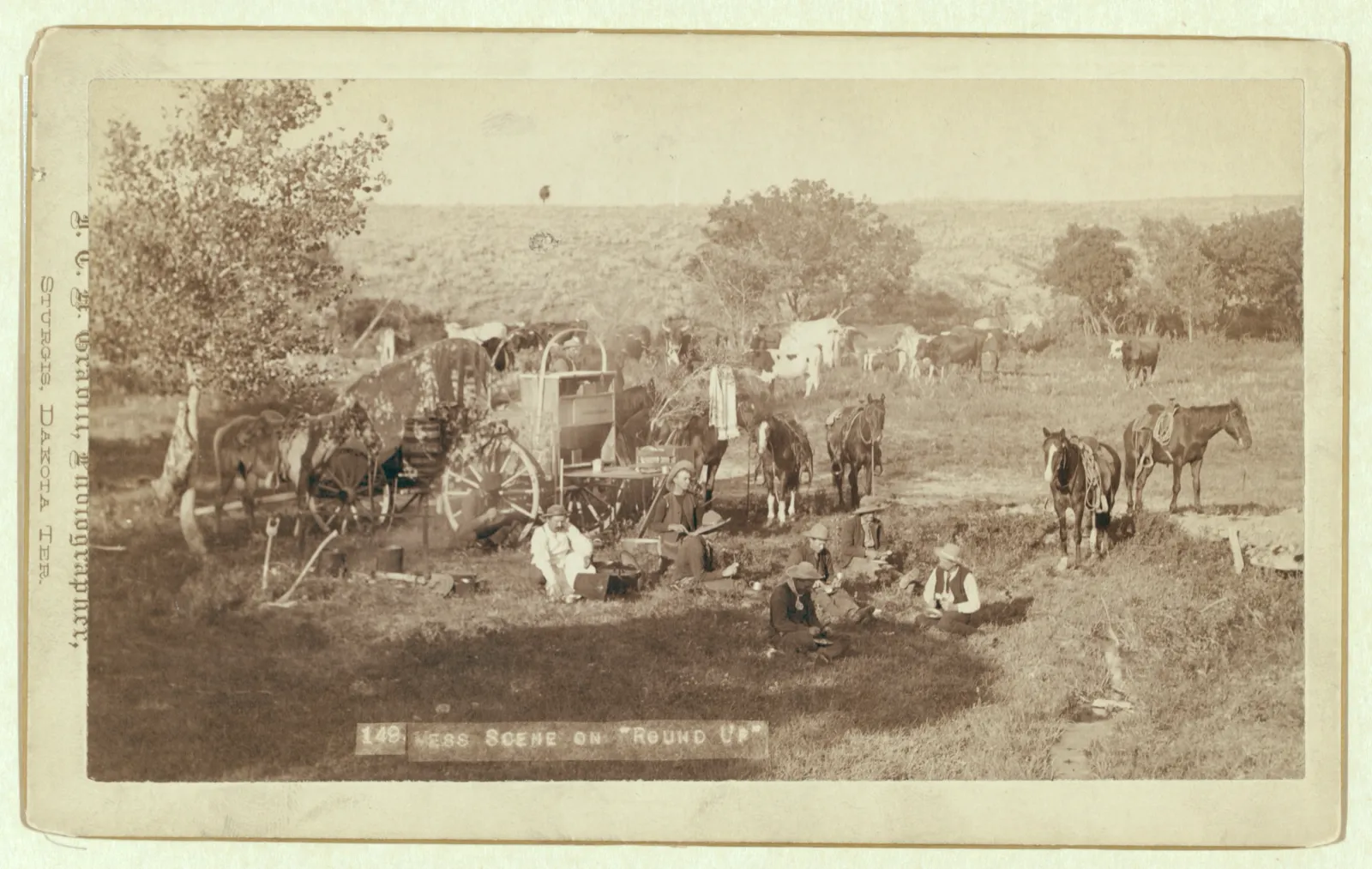
Howard Eaton went west in 1879, the first of three brothers to go. Willis and Alden followed him to the Little Missouri, near Medora, and the three ran cattle on what they called the Custer Trail Ranch. The Northern Pacific Railroad reached the Badlands in 1880.
Friends from the East came out to hunt and ride, at first as Howard's guests. Mary Roberts Rinehart, who rode with him in 1915, wrote down how that changed:
By their own insistence, as the parties grew larger, they determined to help defray the cost of the expeditions.
Mary Roberts Rinehart, Through Glacier Park, 1916
The usual date is 1882. That year Bert Rumsey, an Eastern guest, insisted on paying. A National Park Service history notes that this “violated traditional western hospitality.” The Eatons kept guest registers, and the registers for 1883 to 1903 survive at the American Heritage Center at the University of Wyoming.
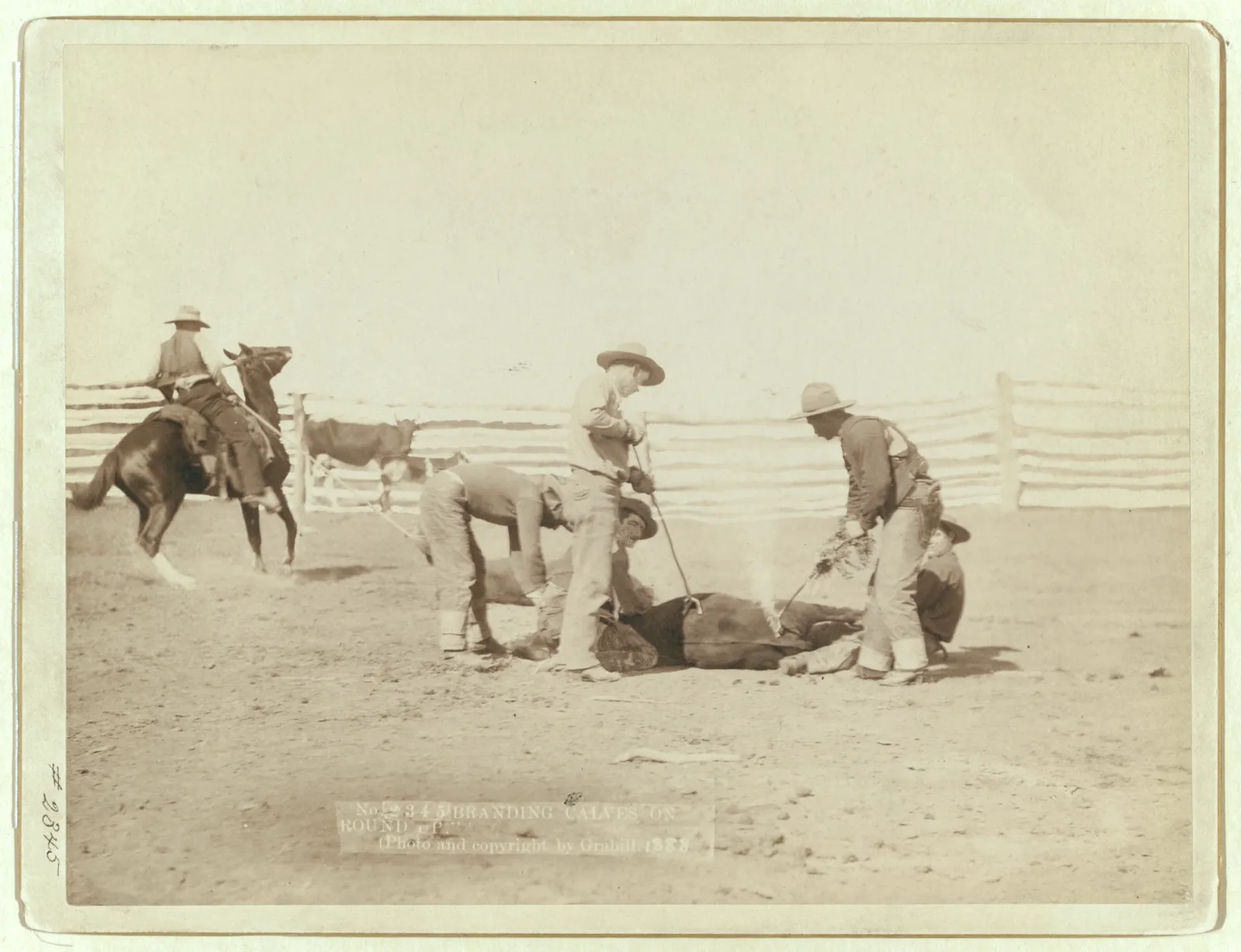
Cattle were still the business. A drought and the winter of 1886 to 1887 hit the Eatons hard, and they came through it. By 1891 they charged a set weekly rate for room and board.
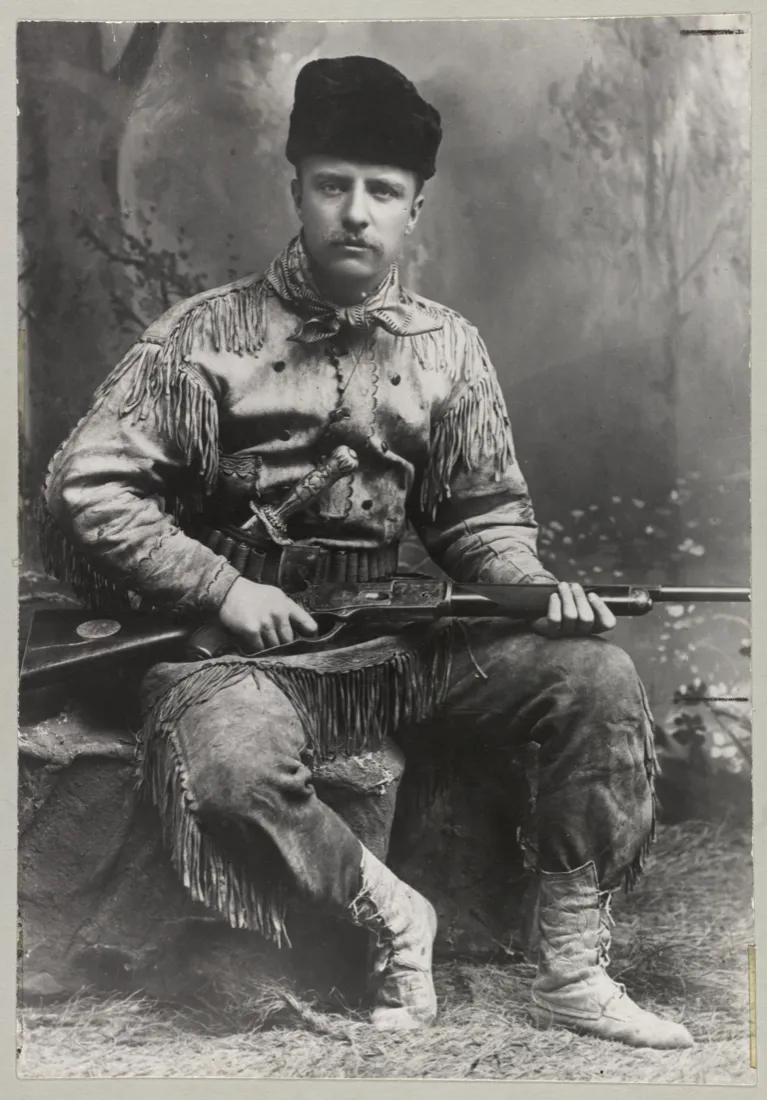
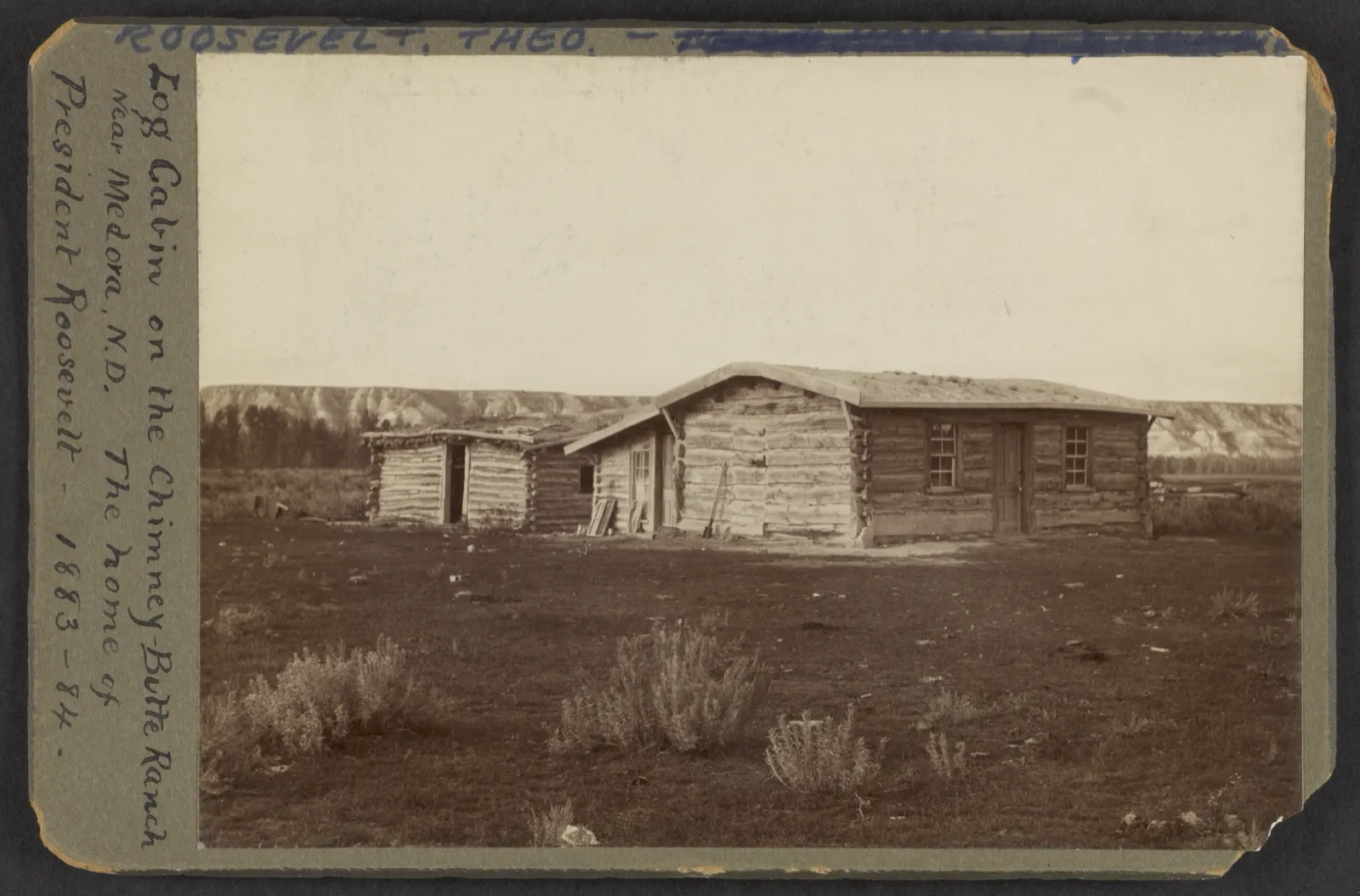
Their best-known neighbor came in September 1883. Theodore Roosevelt arrived to hunt buffalo and, before the trip was over, bought into the Chimney Butte Ranch, also called the Maltese Cross, seven miles south of Medora. In 1884 he started a second ranch, the Elkhorn, on the Little Missouri. Rinehart says his place “was near the Eaton ranch” and that the men hunted together.
The same winter that hurt the Eatons cost Roosevelt about 60 percent of his cattle. What lasted were the books. Hunting Trips of a Ranchman came out in 1885 and Ranch Life and the Hunting-Trail in 1888, with drawings by Frederic Remington. Years later Roosevelt described the Badlands this way:
It was a land of vast silent spaces, of lonely rivers, and of plains where the wild game stared at the passing horseman.
Theodore Roosevelt, An Autobiography, 1913
Chapter three
Toward the Big Horn
Wolf, Wyoming, 1904
It was in 1904 when the Eatons left the Bad Lands and went toward the Big Horn Mountain.
Mary Roberts Rinehart, Through Glacier Park, 1916
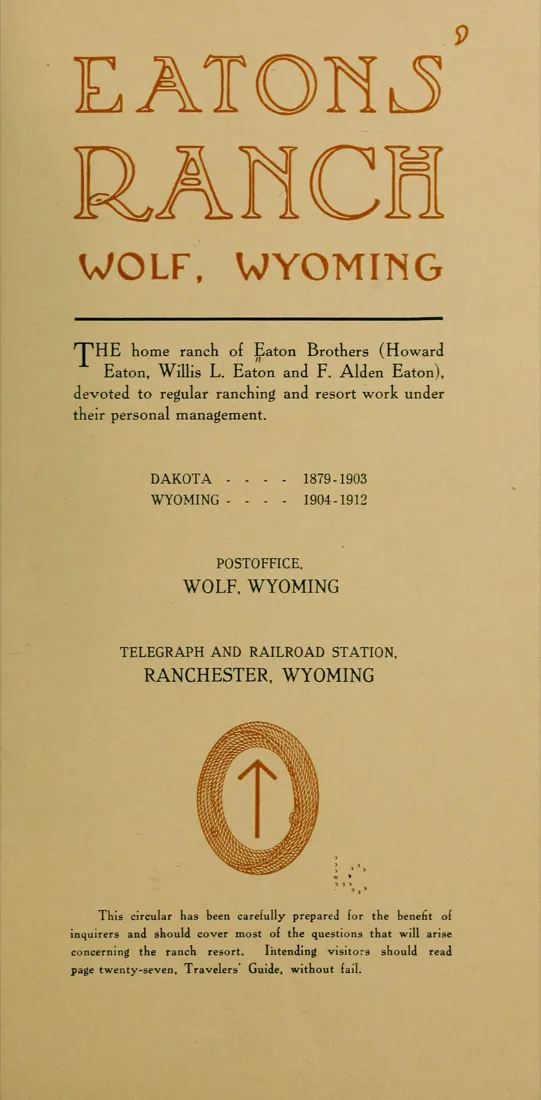
They settled on Wolf Creek, west of Sheridan. Their 1912 brochure put the dates on its title page: Dakota from 1879 to 1903, Wyoming from 1904. It called the place “the home ranch of Eaton Brothers,” given over “to regular ranching and resort work under their personal management.” Guests came by train to Ranchester.
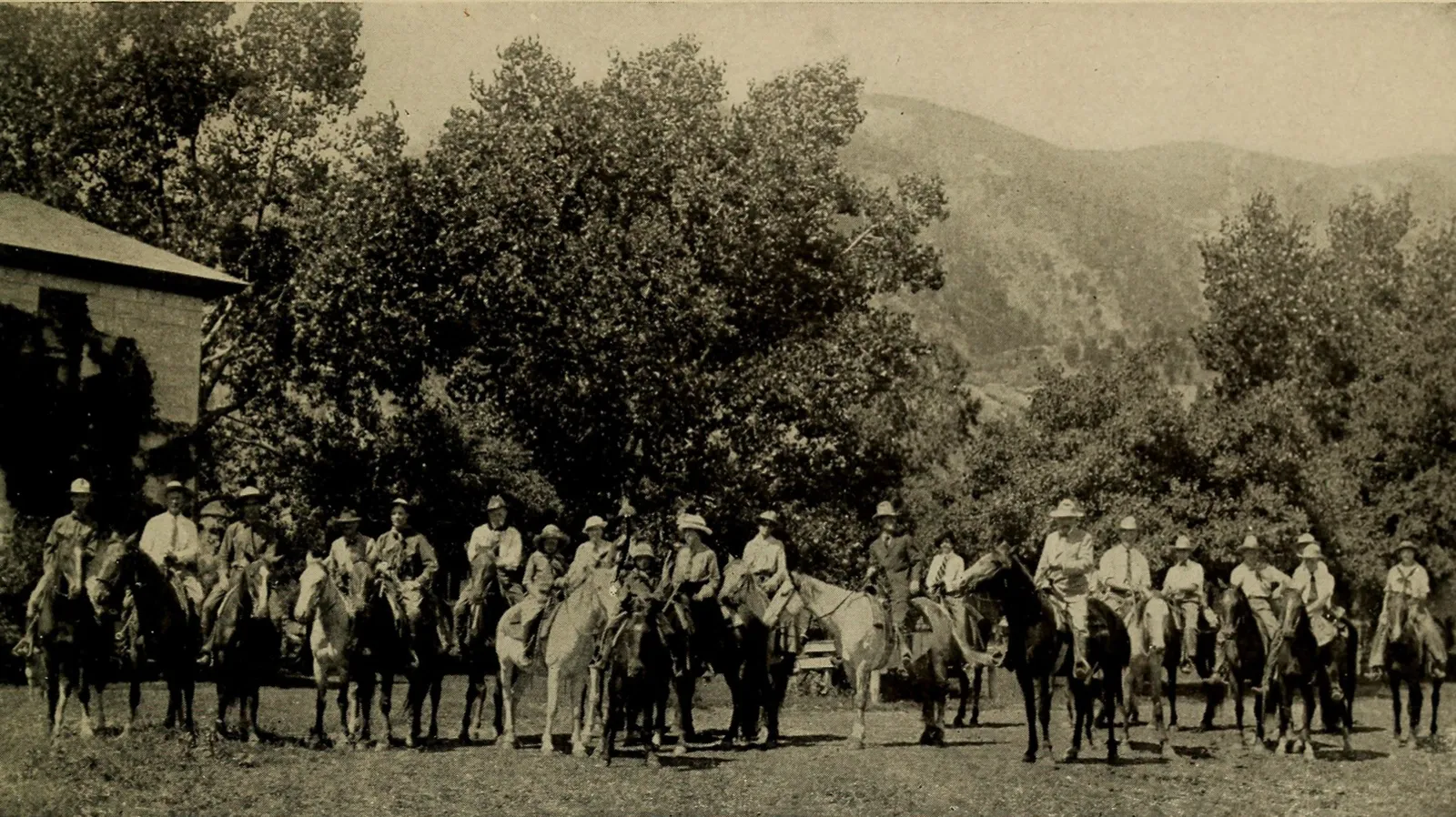
Howard Eaton spent much of his time on the trail. He had been leading parties through Yellowstone since the 1880s. In 1915 he took 42 riders through Glacier National Park, and about half of them were women. One was Rinehart, whose book about the trip came out the next year. Howard died in 1922. The Howard Eaton Trail in Yellowstone, opened in 1923, is named for him. Willis died in 1929.
The Bighorn country filled in with guest ranches around them. Near Buffalo, Paradise Guest Ranch began as Norman Meldrum's cattle ranch, and it gives 1907 as its first year as a family dude ranch. Klondike Ranch has run cattle since 1886 and taken guests since the 1920s. In the 1930s it could hold up to 75 at a time.
TA Ranch near Buffalo goes back to 1882, and its buildings from that year are still there. In April 1892 it was the scene of the Johnson County War. It became a guest ranch much later, after a restoration in 1992. Near Alva, Diamond 7 Bar Guest Ranch was homesteaded by the Mahoney brothers in 1886. One of its homestead certificates is dated 1904 and signed by President Theodore Roosevelt. It is displayed in the ranch's Homestead room.
Chapter four
Buffalo Bill's country
Cody, Wyoming, 1898 to 1929
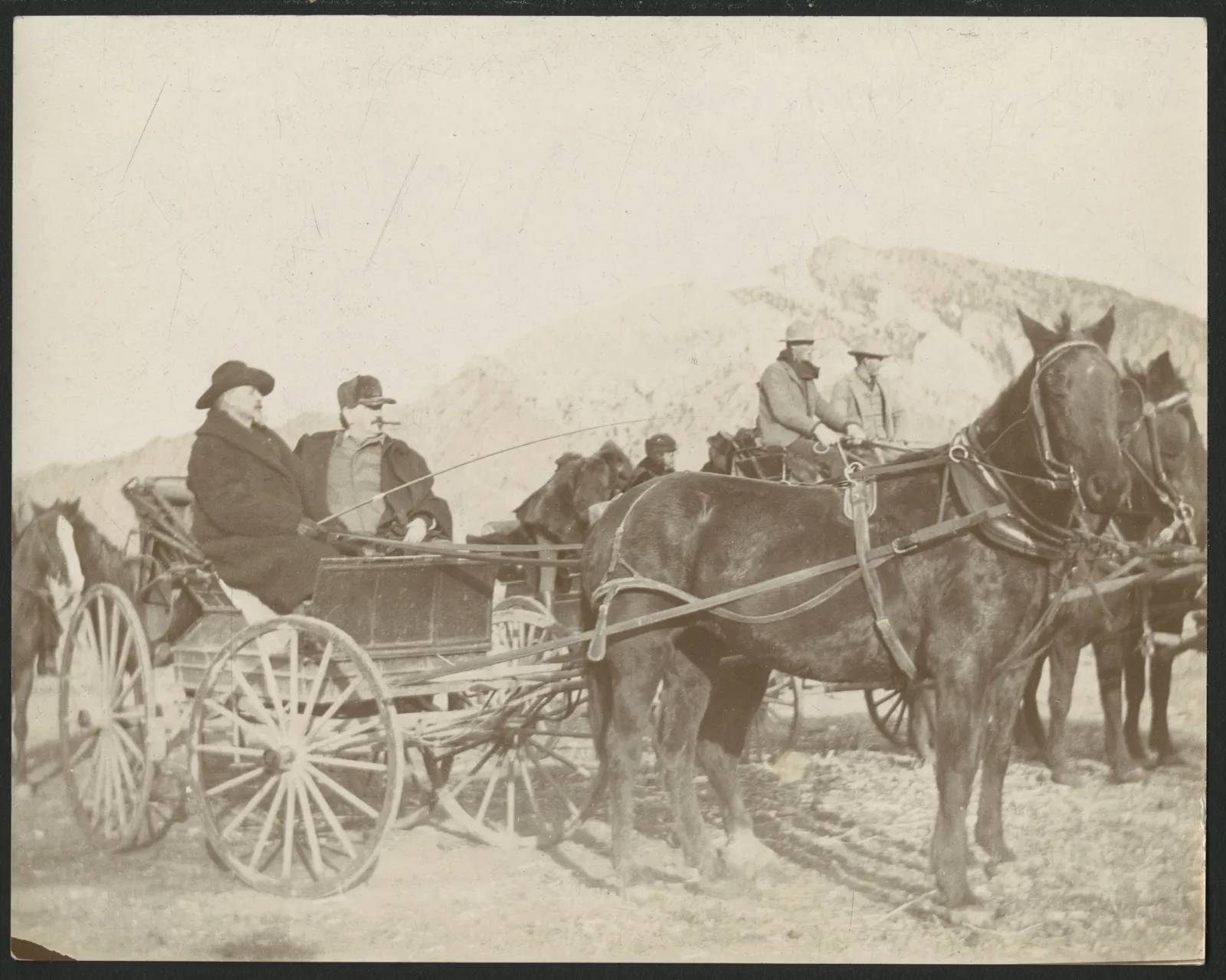
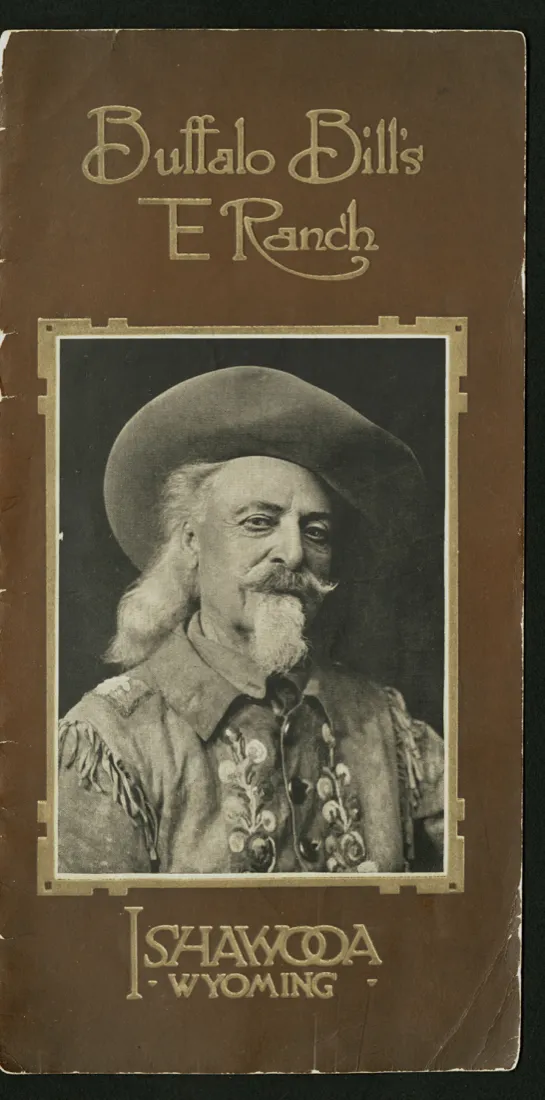
In 1904, by the Buffalo Bill Center of the West's date, Buffalo Bill Cody built Pahaska Tepee, a hotel and hunting lodge about 50 miles west of the town of Cody. He took paying guests at his TE Ranch on the South Fork of the Shoshone too, and printed brochures to find them.
On the North Fork, Crossed Sabres Ranch dates its start to 1898, when Tex Holm set up a lodge where guests slept in wall tents. Holm Lodge burned in 1914. It became Crossed Sabres in 1947. Sources disagree on its first year. WyoHistory.org gives 1898 and the Center of the West gives 1907.
In 1910 a Princeton student named Larry Larom came to the South Fork. Five years later he and Winthrop Brooks bought Valley Ranch. Larom wrote in 1923 that after nine years in the business he still earned less than his cooks. In 1922, two more Princeton graduates, Andrew Anderson and Edward Hubbell, bought A Bar A Ranch in Wyoming and started taking guests alongside their cattle.
The Rumsey family shows up twice on the North Fork. In 1915 Bob Rumsey and George Beck were issued a permit for a tourist resort at Blackwater, and in 1916 they advertised Blackwater Camp in the Yale Daily News. In February 1929 Rumsey got the first Shoshone National Forest dude ranch permit for another site, the UXU. The UXU went on the National Register of Historic Places in 2003.
Chapter five
Jackson Hole and the Yellowstone country
Wyoming and Montana, 1898 to 1929
Louis Joy took the first dudes into Jackson Hole in 1908 at the JY, on Phelps Lake. His partner was Struthers Burt. They split after the 1911 season. In 1912 Burt and Dr. Horace Carncross started the Bar BC on the Snake River.
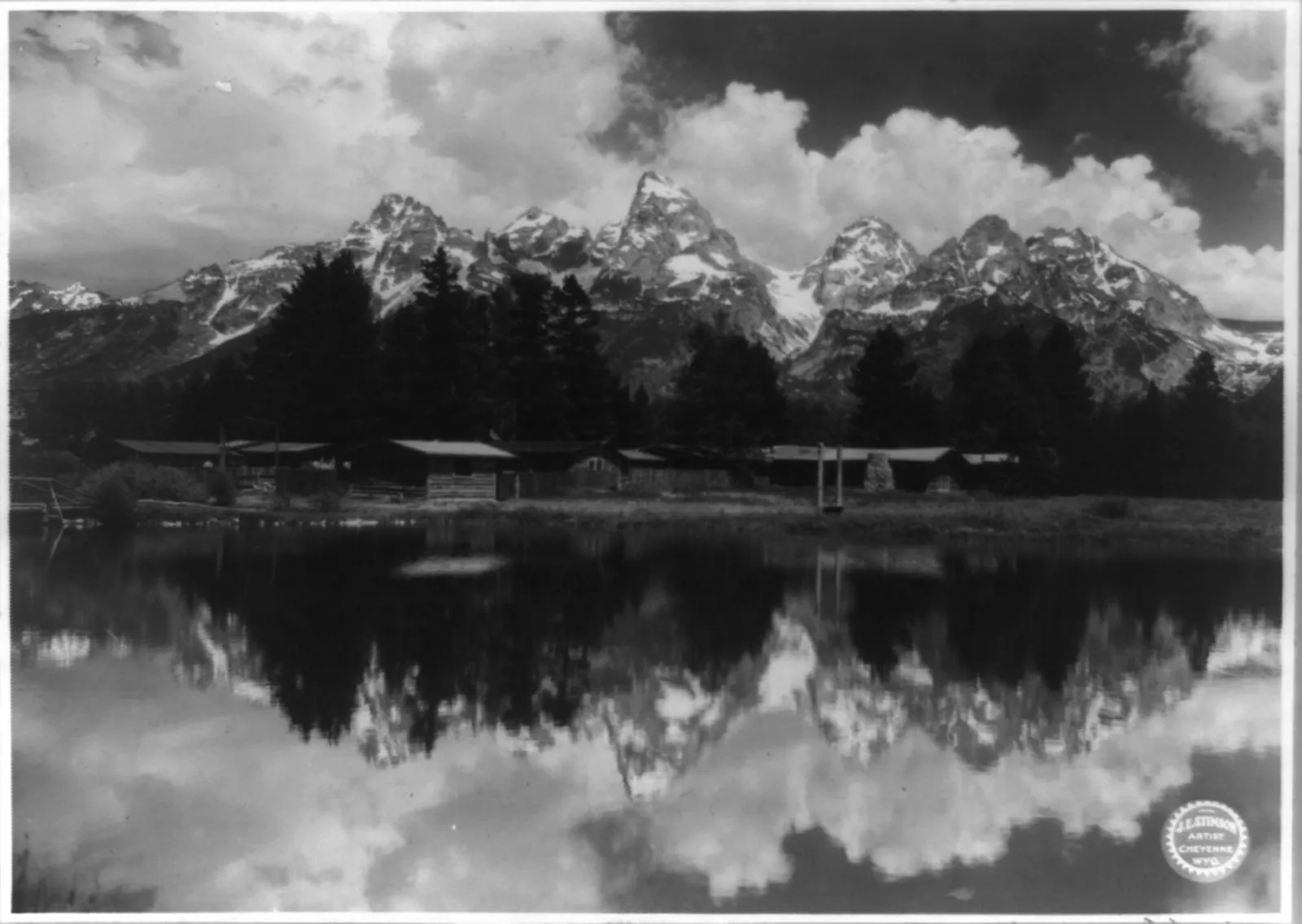
Burt wrote about the life in The Diary of a Dude Wrangler, serialized in the Saturday Evening Post and published as a book in 1924. The Jackson Hole Historical Society calls 1919 to 1929 the golden age of dude ranching in the valley. Guests did not come for a long weekend: “The minimum stay was around two weeks, but most stayed for a month or more.”
The Bar BC went on the National Register in 1990. The JY is now part of the Laurance S. Rockefeller Preserve in Grand Teton National Park. One ranch from that decade still takes guests inside the park. John Turner bought a homestead there in 1926, and five generations of Turners have run Triangle X Ranch since. The land became part of Grand Teton National Park in 1950, and the ranch runs as a Park Service concession.
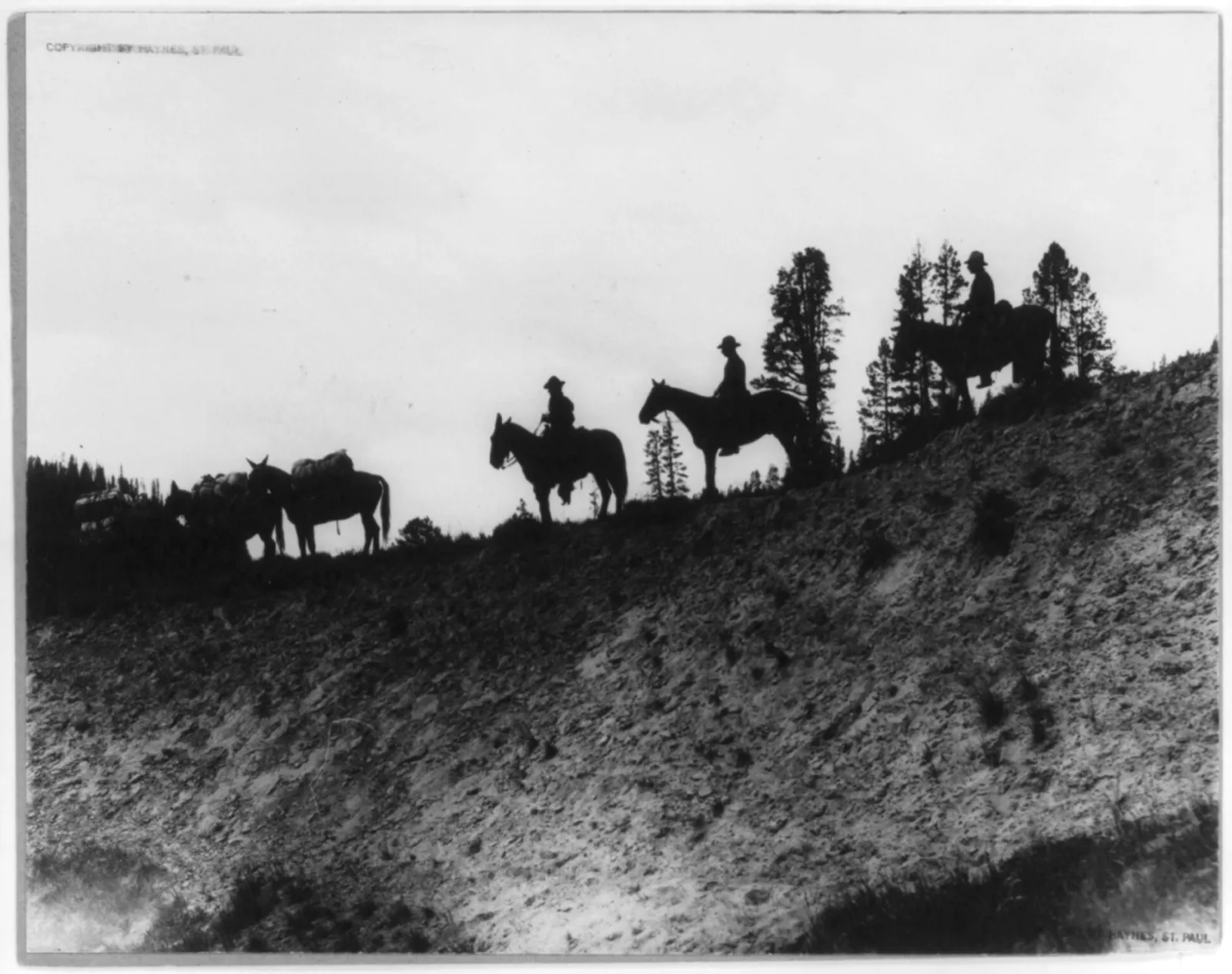
North of the park, Dick and Dora Randall settled on Cedar Creek near Gardiner in 1898. The OTO started as a cattle ranch and a base for hunting parties. Randall guided Theodore Roosevelt, among others. Guests stayed there from the start, but the Park Service archive that holds the ranch's papers says they “did not actually start to pay for their western experiences until about 1912.” In 1926 the Randalls got a post office named Dude Ranch, Montana. The Forest Service calls the OTO the first dude ranch in the state. It closed to guests in 1939 and is now public land.
Other Montana ranches on this site started in the same years. Ernest and Grace Miller founded Elkhorn Ranch in the Gallatin Canyon in 1922. Vic and Eda Benson built the first cabin at Covered Wagon Ranch in 1925, and those cabins are still in use. Lone Mountain Ranch was homesteaded in 1915 and opened to guests from back East in the 1930s.
Chapter six
Bad years for cattle
The West, 1919 to 1939
Lawrence Borne, author of Dude Ranching: A Complete History (1983), says the first dude ranches were family cattle ranches that “diversified during hard economic times.” The hard times came often. In the 1920s, the Park Service history of Jackson Hole says, “the dramatic slump in cattle prices led some ranchers to start taking in dudes.”
Dudes brought cash into places that had little of it. WyoHistory.org puts the math plainly: “Dude ranches didn't need to make money from livestock; they needed only enough livestock to give dudes the sense of being on a ranch.” Caroline Lockhart of Cody put it in a character's mouth in her 1921 novel The Dude Wrangler:
You kin run dudes whur you can't run sheep or cattle.
Caroline Lockhart, The Dude Wrangler, 1921 (fiction)
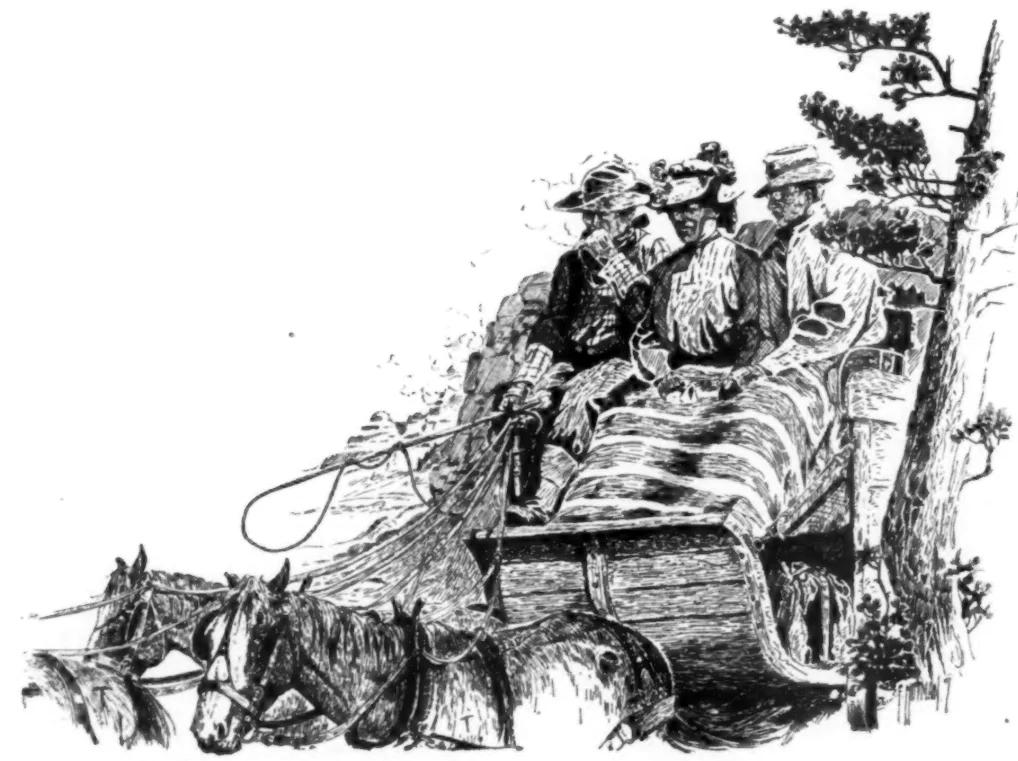
The ranches on this site tell the same story in their own words. The Story family opened Mountain Sky Guest Ranch in 1929, as the Ox Yoke, to help a struggling sheep operation. At Hunewill Guest Ranch in California, a cattle ranch that had sold beef to the Bodie miners, Lenore Hunewill opened to paying guests in 1931 because of the Depression. At Sprucedale Guest Ranch in Arizona, the ranch says, some fishermen stopped by shortly after the Pattersons bought it and asked if there was a place to stay.
1929 was the best season the business had ever had. Then came the crash. Some dude ranches closed, and WyoHistory.org notes that former dudes often bought them. In Wyoming, people came to see the ranches as a hedge against “hard economic times that had crippled agriculture and coal mining,” and in 1934 the University of Wyoming started a degree in recreational ranching.
Chapter seven
The meeting at the Bozeman Hotel
Bozeman, Montana, September 1926
In the early 1920s, as more people drove and fewer rode trains, the Burlington and the Northern Pacific began promoting dude ranches. According to the Dude Ranchers' Association's own history, Ernest Miller of the Elkhorn talked Max Goodsill of the Northern Pacific into helping. The railroad's passenger traffic manager, A. B. Smith, arranged a meeting at the Bozeman Hotel on September 27 and 28, 1926. The University of Wyoming holds the association's records, including a 1926 file titled “Bozeman, Montana, Organization Meeting Sponsored by the Northern Pacific Railway.” One note in the same records gives Billings as the place.
Twenty-six ranches joined that year and 47 the next. Larry Larom of Valley Ranch was president. Willis Eaton and Horace Carncross sat on the board. The Millers' Elkhorn Ranch was a founding member, and so, by its own account, was the family behind Sweet Grass Ranch, a Montana ranch homesteaded in 1889 and now on the National Register.
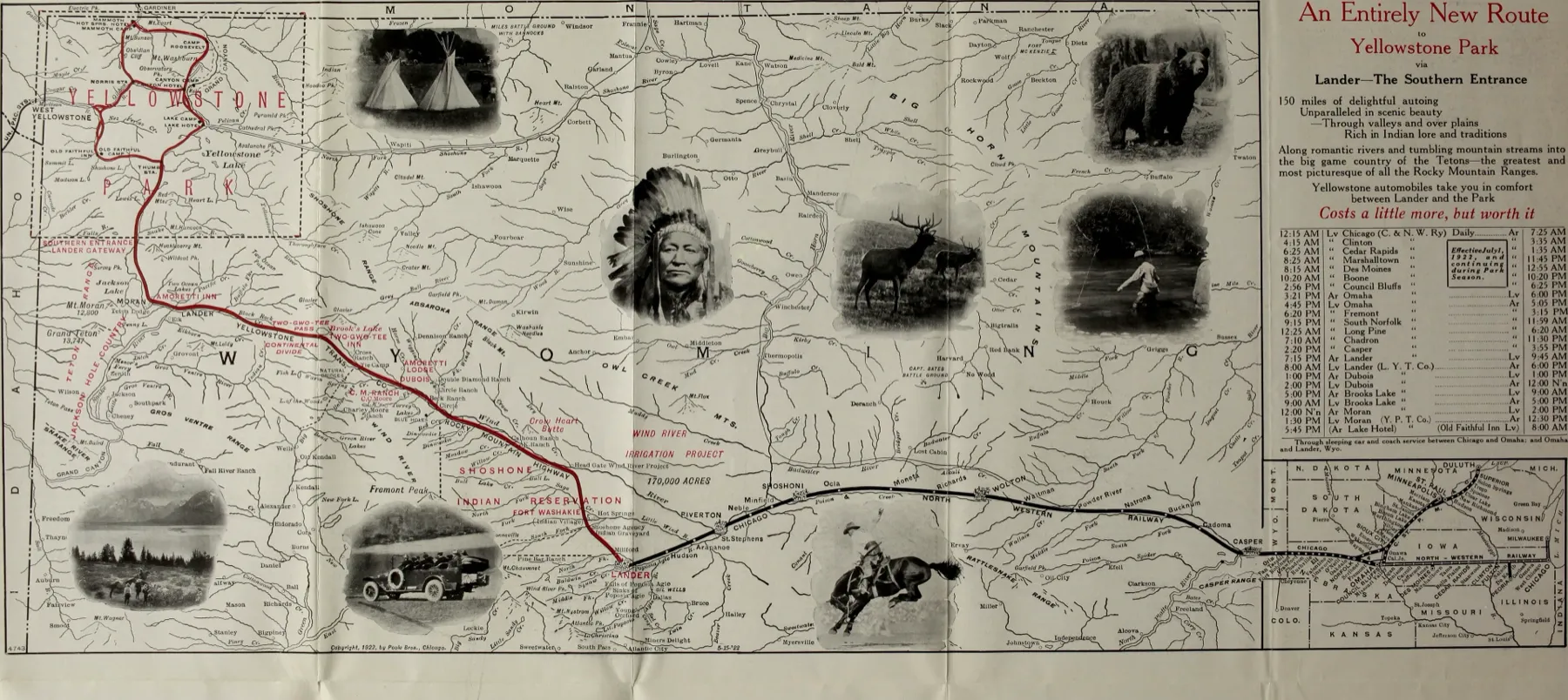
The railroads printed the brochures. The Burlington put out Dude Ranches in the Big Horn Mountains in 1925. The Union Pacific listed Jackson Hole ranches in a 1927 brochure. The Milwaukee Road's Montana Dude Ranches, in 1939, marked 43 of them on its map. By the 1930s Borne counts more than 350 dude ranches in the country. In Wyoming they hosted more than 10,000 guests a year by 1929.
Not everyone could book. “Jewish and African-American applicants were often denied,” WyoHistory.org records, as they were at many exclusive places of the time.
Chapter eight
Winter ranches
Arizona, New Mexico and Texas, 1917 to 1937
The Southwest ran its guest season in winter. In 1917 Hildegard Erickson started taking weekend guests at Faraway Ranch in the Chiricahua Mountains of Arizona. Her sister Lillian left teaching to help, and Lillian ran the guest ranch, blind from 1942, until she closed it in 1970 at age 82. It is now part of Chiricahua National Monument.
Near Wickenburg, Romaine Lowdermilk bought the land for Kay El Bar Guest Ranch in 1909. Lowdermilk's editor visited and spread the word, and the first paying guests came in 1918. The ranch is on the National Register. Wickenburg later called itself the Dude Ranch Capital of the World.
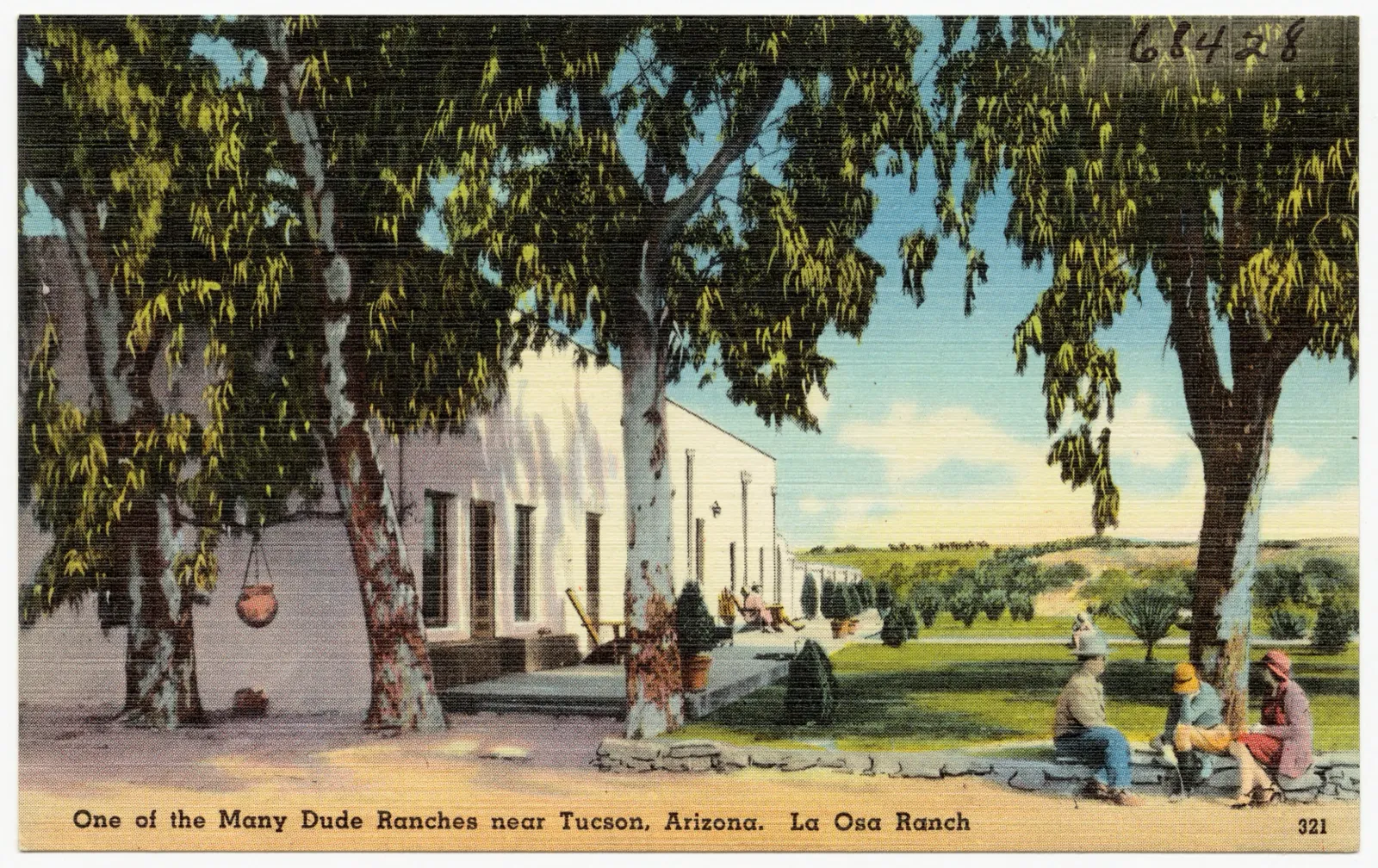
That La Osa is Rancho de la Osa, which opened to guests as Hacienda de la Osa on Thanksgiving, 1924. The Tucson country had several more. At Tanque Verde Ranch, Emilio Carrillo started ranching in 1868, and in the 1920s Jim Converse bought the place and took in Eastern guests. Circle Z Ranch near Patagonia opened in 1926 with room for 24. In 1945 the Millers bought a second ranch, Elkhorn Ranch, so they could run guests all year, and riders first went into the Baboquivari Mountains in the spring of 1946.
In New Mexico, the rodeo promoter Tex Austin bought land on the Pecos River in 1925 and ran the Forked Lightning as an upscale dude ranch. The last guest left in 1933. It is now part of Pecos National Historical Park.
Texas came to it through Bandera. A 2013 resolution of the Texas House says dude ranching there began in 1920, when the Buck Ranch took paying summer guests and the Bruce Ranch took the overflow. By the 1930s more than 30 dude ranches ran near Bandera. A San Antonio newspaper first called the town the Cowboy Capital of the World in 1948. Dixie Dude Ranch, a stock ranch since 1901, opened for guests on July 3, 1937. During World War II, student pilots training in San Antonio were among its first guests.
Chapter nine
After the war
1942 to today
The war took the hired help. The Bar BC shut down in 1942 for lack of workers. Ranches that stayed open cut back, worked around rationing, and some raised food for the war effort. When it ended, Les Averill came home and bought the boys' camp on Flathead Lake that is now Flathead Lake Lodge.
The month-long stay did not come back. The Park Service history of Jackson Hole says dude ranching “has changed significantly and declined since 1945.” Families drove now, and trips got shorter. In Grand Teton, ranch after ranch sold out to the Park Service: the Ramshorn in 1956, the Double Diamond in 1964, the Circle H in 1966, the Half Moon in 1967.
Some ranches started taking guests in those years for the old reason. At Rankin Ranch in California, founded in 1863, Helen Rankin opened to guests in 1965 because she needed better cash flow from the land.
By 1981 the Dude Ranchers' Association was down to 56 members. Then City Slickers came out in 1991. In May 1992 the Christian Science Monitor reported membership “up to 102, the first time since the 1930s that it has been over 100.” The association turned 100 on September 27, 2026. A Wyoming Public Media report that month counted 91 member ranches.
The Eaton brothers' guest registers, 1883 to 1903, are in the American Heritage Center at the University of Wyoming in Laramie.
The map
Where it happened
Places in this history Ranches on Brand Book that took guests by 1945
On Brand Book
The early guest ranches you can still book
By the year each ranch says it first took guests
- 1886Cherokee Park RanchColoradoSays it has welcomed guests since 1886, and was a stagecoach stop between Fort Collins and Laramie in the late 1880s.The ranch's history (opens in a new tab)
- 1898Crossed Sabres RanchWyomingBegan in 1898 as Tex Holm's lodge, with guests sleeping in wall tents.The ranch's history (opens in a new tab)
- 1907Paradise Guest RanchWyomingNorman Meldrum's cattle ranch in the Bighorns. The ranch gives 1907 as its first year as a family dude ranch, and his log cabin still stands.The ranch's history (opens in a new tab)
- 1912Bar Lazy J Guest RanchColoradoOpened as a resort in 1912 under the name Buckhorn Lodge.The ranch's history (opens in a new tab)
- 1915Blackwater Creek Lodge & Guest RanchWyomingBob Rumsey and George Beck got a resort permit here in 1915 and advertised Blackwater Camp in the Yale Daily News in 1916.The ranch's history (opens in a new tab)
- 1918Kay El Bar Guest RanchArizonaRomaine Lowdermilk bought the land in 1909. A visiting newspaper editor spread the word, and the first paying guests came in 1918.The ranch's history (opens in a new tab)
- 1922A Bar A RanchWyomingTwo Princeton graduates, Andrew Anderson and Edward Hubbell, bought the ranch in 1922 and ran guests and cattle together.The ranch's history (opens in a new tab)
- 1922Elkhorn RanchMontanaFounded by Ernest and Grace Miller in 1922, with cabins built from logs and rock off the place.The ranch's history (opens in a new tab)
- 1924Rancho de la OsaArizonaOpened to guests as Hacienda de la Osa on Thanksgiving, 1924.The ranch's history (opens in a new tab)
- 1920sTanque Verde RanchArizonaEmilio Carrillo started ranching here in 1868. In the 1920s Jim Converse bought it from Carrillo's son and took in Eastern guests.The ranch's history (opens in a new tab)
- 1920sKlondike RanchWyomingA cattle ranch from 1886. It has taken guests since the 1920s, and in the 1930s held up to 75 at a time.The ranch's history (opens in a new tab)
- 1925Covered Wagon RanchMontanaVic and Eda Benson built the first cabin in 1925, and it has been a guest ranch since. Those first cabins are still in use.The ranch's history (opens in a new tab)
- about 1925C Lazy U RanchColoradoTwo women from Massachusetts visited around 1925 and talked Jack and Gertrude into running it as a guest ranch.The ranch's history (opens in a new tab)
- 1926Circle Z RanchArizonaDenton Sanford homesteaded on Sonoita Creek in 1874. The guest ranch opened in 1926 with room for 24.The ranch's history (opens in a new tab)
- 1926Triangle X RanchWyomingThe Turner family has taken guests since 1926. It now runs as a National Park Service concession inside Grand Teton.The ranch's history (opens in a new tab)
- 1927CM RanchWyomingCharles Moore ran pack trips for boys until a 1926 fire. He opened the CM in 1927 for the boys' parents and families.The ranch's history (opens in a new tab)
- 1929Mountain Sky Guest RanchMontanaOpened in 1929 as the Ox Yoke, to help a struggling sheep operation.The ranch's history (opens in a new tab)
- 1929UXU RanchWyomingFounded by Bob Rumsey, whose father helped found Cody. It still has 18 of its original buildings.The ranch's history (opens in a new tab)
- 1931Hunewill Guest RanchCaliforniaA cattle ranch that supplied beef to the Bodie miners. In 1931, in the Depression, Lenore Hunewill opened it to paying guests.The ranch's history (opens in a new tab)
- 1930sLone Mountain RanchMontanaHomesteaded in 1915. In the 1930s the younger Butlers opened it to friends and guests from back East.The ranch's history (opens in a new tab)
- 1937Dixie Dude RanchTexasA stock ranch since 1901. It opened for guests on July 3, 1937, and student pilots training in San Antonio during the war were among the first.The ranch's history (opens in a new tab)
- 1945Flathead Lake LodgeMontanaBuilt as a boys' camp in 1932. Les Averill came home from World War II in 1945 and bought it.The ranch's history (opens in a new tab)
Timeline
Dates at a glance
- 1873Isabella Bird pays board at Griffith Evans's cattle ranch in Estes Park, Colorado.
- 1879Howard Eaton goes west to the Dakota Badlands. His brothers Willis and Alden follow.
- 1880The Northern Pacific Railroad reaches the Badlands.
- 1882Bert Rumsey insists on paying for his stay with the Eatons.
- 1883A poem called "The Dude" runs in the New York World. Roosevelt comes to the Badlands to hunt buffalo.
- 1886-87A hard winter. Roosevelt loses about 60 percent of his cattle.
- 1898Dick and Dora Randall settle near Gardiner, Montana, on what becomes the OTO.
- 1904The Eatons move to Wolf, Wyoming. Buffalo Bill opens Pahaska Tepee west of Cody.
- 1908The JY takes guests, the first dude ranch in Jackson Hole.
- 1912Struthers Burt and Horace Carncross start the Bar BC. OTO guests begin to pay.
- 1917Hildegard Erickson takes weekend guests at Faraway Ranch, Arizona.
- 1920The Buck Ranch takes paying summer guests near Bandera, Texas.
- 1922Howard Eaton dies.
- 1924Burt's The Diary of a Dude Wrangler is published.
- 1926The Dude Ranchers' Association meets at the Bozeman Hotel, September 27 and 28.
- 1929A record season, then the October crash.
- 1934The University of Wyoming offers a degree in recreational ranching.
- 1942The Bar BC shuts down for lack of help.
- 1948A San Antonio paper first calls Bandera the Cowboy Capital of the World.
- 1981Dude Ranchers' Association membership is down to 56.
- 1992Membership passes 100 for the first time since the 1930s, the year after City Slickers.
- 2026The association turns 100.
Sources
Where sources disagree, this piece gives the date from the earliest or most direct one and says so in the text. The Eatons' move to Wyoming is given as 1902, 1903 and 1904 in different places; 1904 is from Rinehart, who rode with Howard Eaton, and from the Eatons' own 1912 brochure. Every photograph and brochure shown is in the public domain.
- Eatons' Ranch, Wolf, Wyoming, brochures for 1912 and 1915 (Library of Congress, via Internet Archive)
- Isabella L. Bird, A Lady's Life in the Rocky Mountains (1879), Letter VIII
- Mary Roberts Rinehart, Through Glacier Park: Seeing America First with Howard Eaton (1916)
- Theodore Roosevelt, An Autobiography (1913), "In Cowboy Land"
- Caroline Lockhart, The Dude Wrangler (1921)
- John Daugherty, A Place Called Jackson Hole, ch. 14, "The Dude Wranglers" (National Park Service, 1999)
- John Clayton, "Romancing the West: Dude Ranching in Wyoming," WyoHistory.org
- Lawrence R. Borne, "Dude Ranches," Encyclopedia of the Great Plains
- Eatons' Ranch records, American Heritage Center, University of Wyoming
- Dude Ranchers' Association records, American Heritage Center, University of Wyoming
- Dude Ranchers' Association, History
- National Park Service, Elkhorn Ranch and Maltese Cross Cabin, Theodore Roosevelt National Park
- Theodore Roosevelt Presidential Library, "TR as Western Writer"
- National Park Service, Bar BC Dude Ranch and JY Ranch, Grand Teton National Park
- Jackson Hole Historical Society and Museum, "Dude Ranching in Jackson Hole"
- Yellowstone National Park Archives, OTO Ranch Collection finding aid
- U.S. Forest Service, "Dude Ranch, Montana"
- Buffalo Bill Center of the West, "Dude ranching"
- Wyoming State Historic Preservation Office, UXU Ranch National Register listing
- National Park Service, Lillian Riggs and Faraway Ranch, Chiricahua National Monument
- National Park Service, The Forked Lightning Ranch, Pecos National Historical Park
- Texas House Resolution 2595, 83rd Legislature (2013), on Bandera
- Texas Historical Commission marker, "Bandera, Cowboy Capital of the World"
- Montana State University Library, Milwaukee Road, Montana Dude Ranches (1939)
- Anatoly Liberman, "Dude: a long history of a short word," OUPblog (2022)
- Guy Halverson, "Bookings Boom at Dude Ranches," Christian Science Monitor, May 26, 1992
- Wyoming Public Media via KUNC, September 18, 2026, on the association's centennial